3 Gentle Exercises for Knee Pain (Women Over 50)
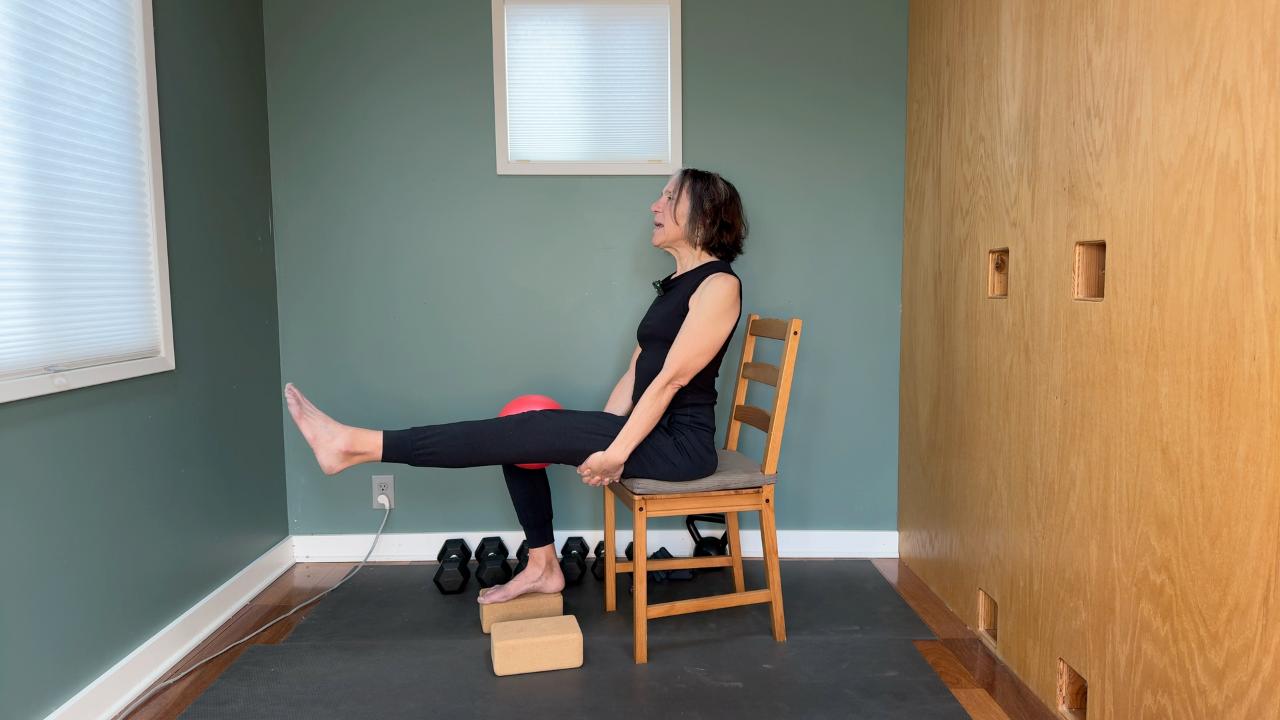
If you have knee pain, you know the frustration.
You've been told to exercise.
But most knee exercises make the pain worse.
I get it. I'm 60 with two hip replacements.
I've spent 44 years helping women strengthen their bodies without wrecking them.
In this post, I'm showing you 3 gentle seated exercises for knee pain that build strength without causing more pain. You can do these at home with just a chair and a Pilates ball (or a rolled-up towel).
What makes these different? They're seated. They're progressive. And they are safe and effective.
Why Most Knee Exercises Make Pain Worse
Here's the problem with most knee pain exercises you'll find online.
They assume your knees can handle the same load as someone without pain. They tell you to do squats, lunges, step-ups - exercises that put your full body weight on painful joints.
And when those hurt, you think exercise doesn't work for you.
But that's not true.
Your knees need strength. Weak muscles around your knee make the pain worse. But you need exercises that build strength without aggravating the joint.
That's where seated exercises come in.
The Best Exercises for Knee Pain
These 3 exercises target the muscles that support your knee - your quadriceps, inner thighs, and hamstrings - without putting excessive pressure on the joint itself.
What you'll need:
A sturdy chair
A Pilates ball (or rolled-up towel)
Optional: light ankle weights (1-3 lbs)
Important: Don't skip ahead. Start with Exercise 1. Stay there until you're confident. Even if that takes weeks. Your knees need time to adapt.
Exercise 1: Seated Leg Squeezes
How to do it:
Sit on a sturdy chair with your feet flat on the floor (or on a step if your chair is high)
Your thighs should be parallel to the floor
Place a Pilates ball (or rolled towel) between your knees
Gently squeeze the ball for 2 seconds
Release slowly
Repeat 8-10 times
Why this works: This exercise strengthens your inner thigh muscles (adductors) which help stabilize your knee. You're not moving the knee joint - you're strengthening the muscles that support it.
Modification: If squeezing is too hard, use a softer object or just bring your knees together without resistance.
When you're ready to progress: When you can do 10 squeezes easily without pain, move to Exercise 2.
Exercise 2: Seated Single Leg Extensions
How to do it:
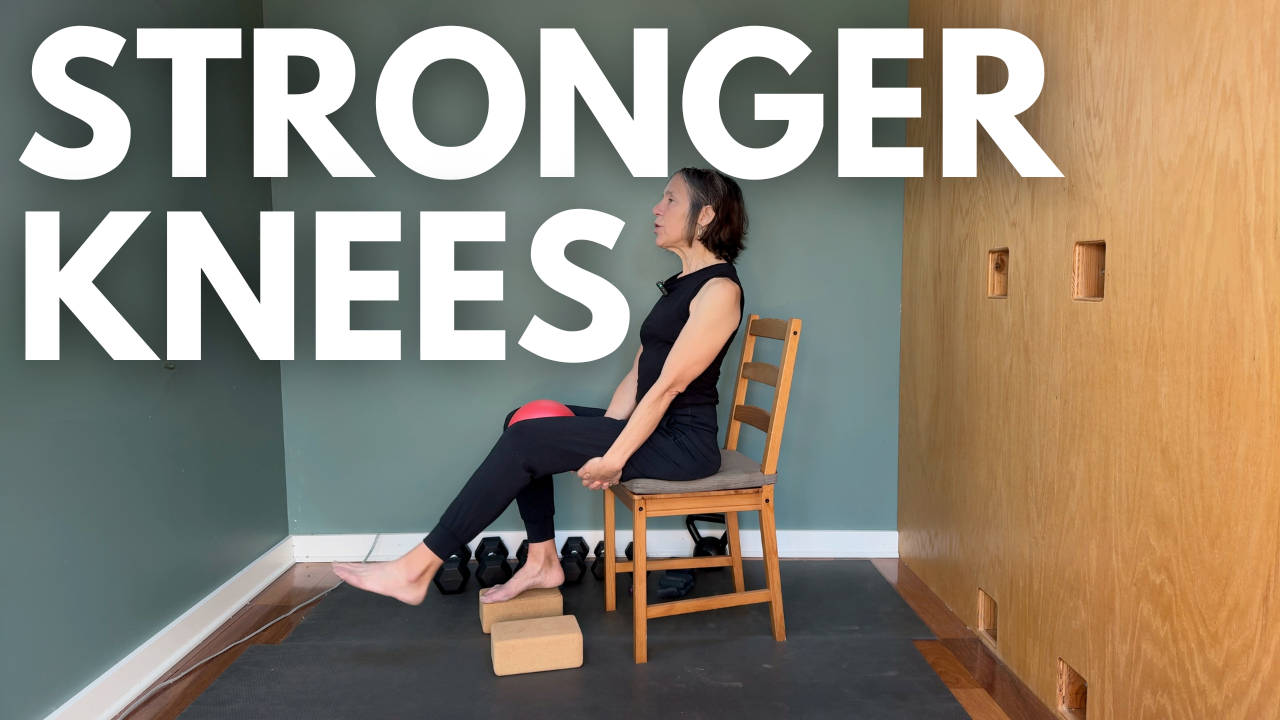
Sit on the same chair with the Pilates ball between your knees
Lace your hands underneath one thigh for support
Squeeze the ball gently
Extend just that one leg straight out in front of you
Hold for 1-2 seconds
Lower slowly back down
Repeat 8-10 times on each leg
Why this works: This targets your quadriceps (front of thigh) which are critical for knee stability. The ball keeps your inner thighs engaged while you work the quad.
Common mistakes:
Don't lock out your knee at the top
Don't let your thigh lift off the chair
Keep the movement controlled
Modification: If you can't straighten your leg all the way, go as far as you can. Partial range is fine.
When you're ready to progress: When you can do 10 reps on each leg with good form and no pain, move to Exercise 3.
Exercise 3: Seated Leg Extensions with Resistance
How to do it:
Same setup as Exercise 2
Add a light ankle weight (1-3 lbs) to your ankle
Perform the same leg extension movement
8-10 reps on each leg
Why this works: Adding resistance progressively strengthens the muscles without overloading your knee joint.
What if you don't have ankle weights? Use a resistance band looped around your ankle and anchored to the chair leg.
Important: Don't add weight until Exercise 2 is easy. More weight ≠ better if your form breaks down.
How Often Should You Do These Exercises for Knee Pain?
Start with: 2-3 times per week
Progression: When the exercises feel easy, you can:
Add more reps (up to 15 per leg)
Add more resistance
Do them 4-5 times per week
Don't: Skip days and then do a bunch at once. Consistency beats intensity for knee pain.
What If These Exercises Still Hurt?
If even Exercise 1 causes pain, that's okay. It means you're not ready for that movement yet.
Try this instead:
Just squeeze the ball without extending your leg
Hold the squeeze for 5-10 seconds
Do 5 reps, 2 times per day
Build up slowly
When to see a doctor: If you have sharp, sudden pain, swelling, or your knee gives out, see a healthcare provider. These exercises are for chronic knee pain and stiffness - not acute injury.
Why Seated Exercises Are A Great Choice For Beginners
Seated exercises give you:
Stability: You're not worried about balance
Control: You can focus on the muscle, not staying upright
Safety: Less risk of falling or aggravating other joints
Progressive loading: Easy to add resistance when ready
Your Free Strength Plan
Here's what I've learned in 44 years of coaching:
Strength and mobility exercises are essential- but the way that exercise works is to make sure each exercise works for YOU.
That's why I created a free 5-day strength training program for women over 50.
Here's what you get:
Day 1: Welcome + equipment list
Days 2-5: Learn the 4 foundational movements (squat, hinge, push, pull) - one per day, modified for YOUR body
Day 6: Full guided class putting it all together (just like my paid membership)
One video per day. Modifications for knee pain, hip issues, shoulder problems.
Get the free 5-day program here →
The Bottom Line on Exercises for Knee Pain
You can strengthen your knees.
But you need the right exercises, done progressively, with modifications for your body.
Start with Exercise 1.
Stay there until it's easy. T
Then progress to Exercise 2.
Then Exercise 3.
And if you want ongoing guidance - not just spot exercises but a complete plan for your whole body - try my 5-day program.