Impact Exercises for Bone Density
Impact exercises for osteoporosis, osteopenia and low bone density.
If you have low bone density, osteopenia or osteoporosis- you have likely been told to strength train AND do impact exercises. Which can be totally overwhelming because you also have been told to “be careful”.
I am going to review what I teach my students and clients when they are starting to add a bit of impact into their strength training exercise routine.
New here? Start with my complete guide to exercising with osteoporosisfor the full picture, strength, mobility, and impact together. This post goes deep on the impact piece.
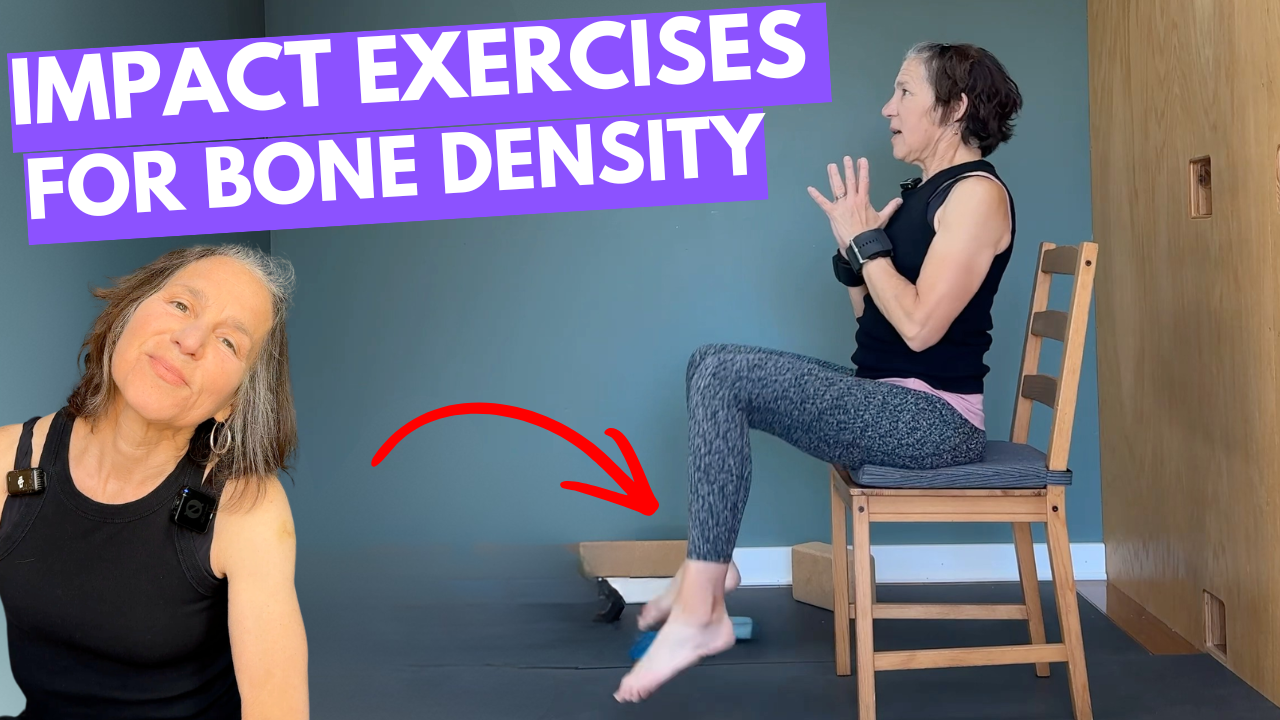
Is impact exercise safe if you have osteoporosis?
Like most things it depends on where you are starting from. But we need to think about our bones like this- our skeleton isn't a dry frame that doesn’t change. Bone is living tissue, and bone rebuilds itself when we add a safe effective challenge.
Just like our muscles and joints- if must ask our bones to move and to DO things- in the form of adding load and a bit of impact, our bones get stronger. This is one of the main reasons for strength training- along with building balance and body awareness.
As for impact, please watch the video above to see the two simple exercises to start with. When your foot drives into the floor, the floor pushes back up through you. We can call that a ground reaction force that our bone cells just read it as a reason to lay down new bone. This is the simplest way to think about impact training for building bone density.
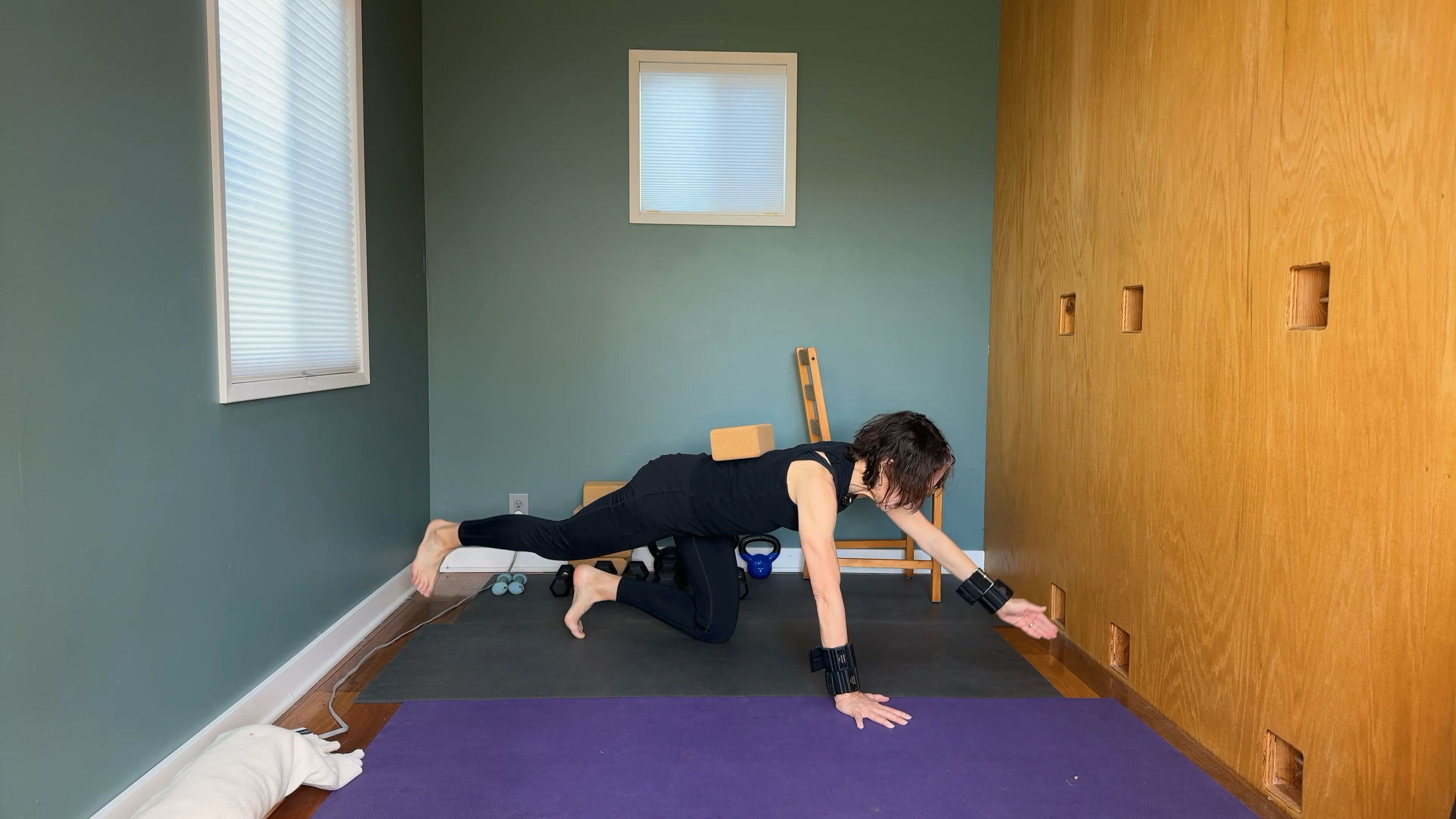
Is walking and yoga enough for building bone density?
You're already moving. A walk most days, a yoga class, maybe a hike on the weekend. Keep ALL of that actviity.
But gentle movement doesn't load the bone hard enough. Walking asks the same small thing of your bones over and over. Impact asks for MORE.
Earn your impact first, in other words we must be confident and competent in foundational exercises, like a sit to stand and a heel raise before we add impact. Please refer to the video for details on that!
Before you add a stomp or a drop, you want to be able to do the exercise WITHOUT the impact. If you can't yet stand up out of a chair without pushing off with your hands, start there. Strength first, impact second. Got a question about this- just ask!
What impact exercises can I do at home?
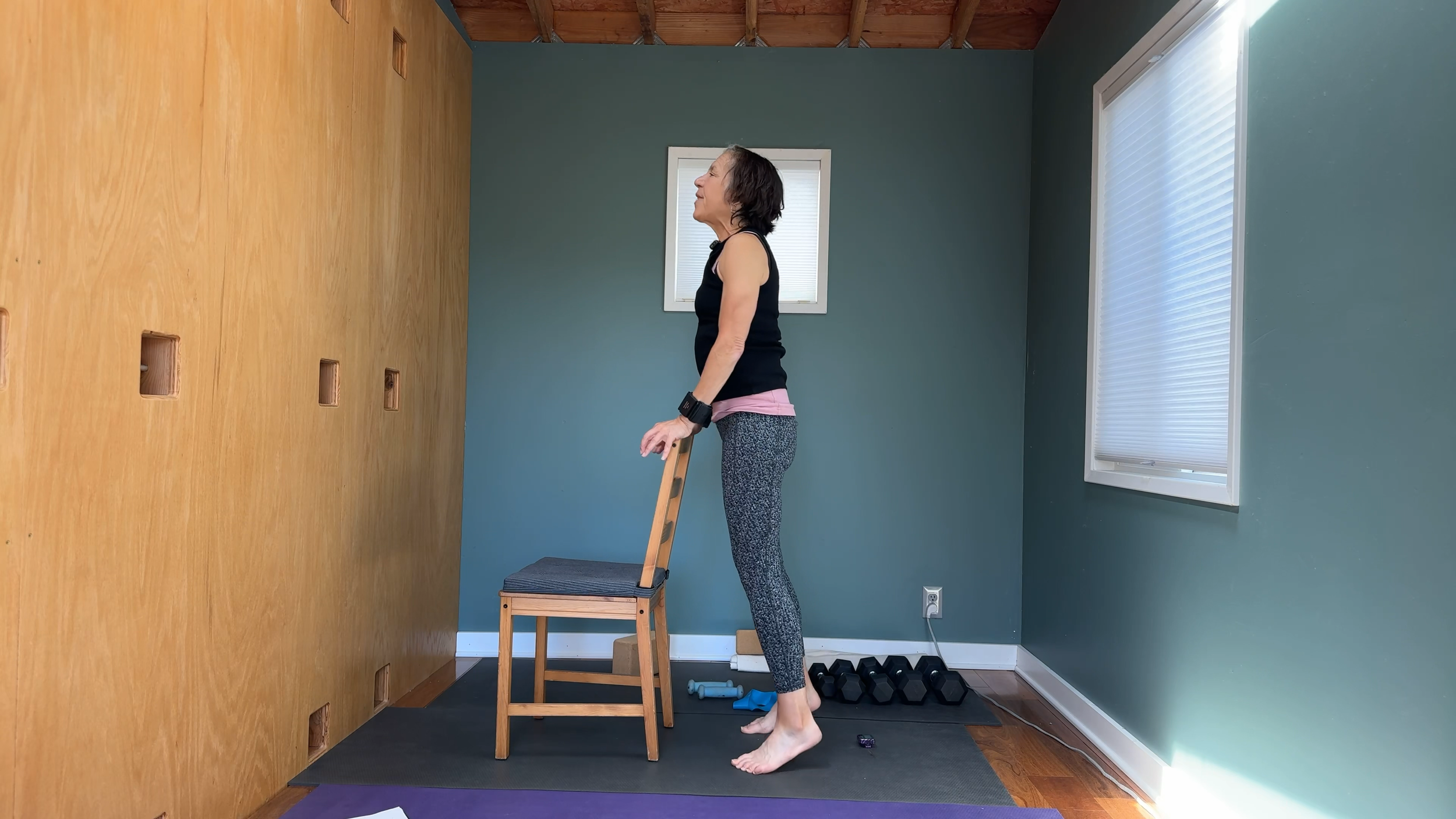
Heel drops. Hold the back of a sturdy chair. Rise up onto the balls of your feet, then drop your heels sharply into the floor. Gentle at first. Once you feel steady, drop with more purpose and let it make a little noise. The amount of intensity is up to you.
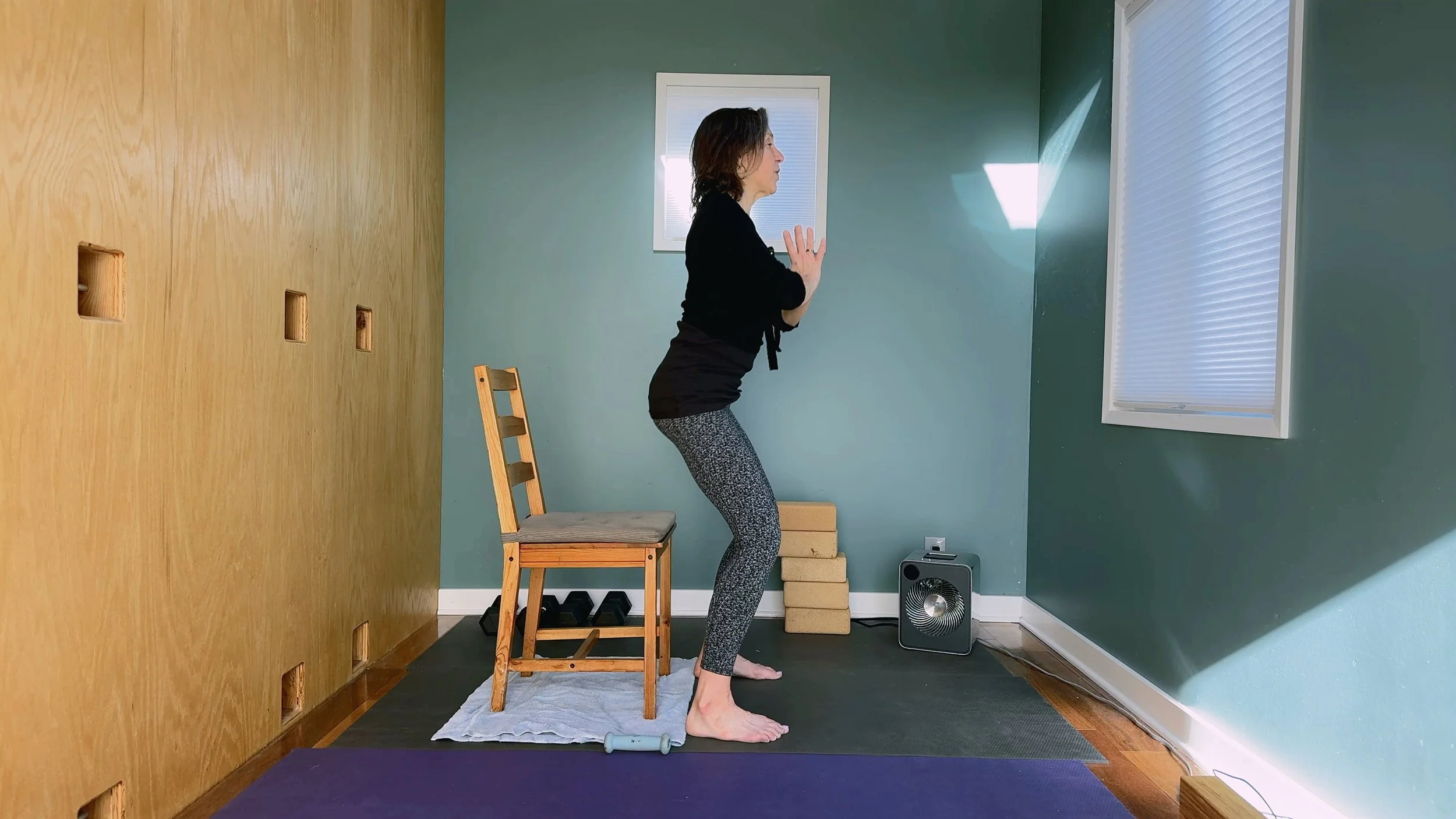
Stomp squats. Only once you can stand up out of a chair without your hands. Hands at your chest, lower down, and stomp as you rise. The more you stomp, the harder your bones work.
Where to start
You can move. You just need to know which moves earn their place, and how to start them in the right order for the body you have today.
That's exactly what we do inside The Elevate Practice. A new class to follow twice a week, a live strength workout with me every Wednesday, all built for women with low bone density who want to get stronger without guessing. You're not doing it alone.
The way in is my free 5-day program. If you're done guessing and want to learn HOW to exercise at home- start with this free five day program!
If you want to get started with our fabulous monthly PROGRAM right away- read all about it here.
Questions from students:
Is impact exercise safe if I have osteoporosis?
Mostly, yes, if you build up slow. You start with small, controlled force and add more only as your strength allows. Check with your doctor before you begin.
Can I do impact exercise if I've had a hip replacement?
I've got two, so I'm not going to tell you a replacement rules you out. It doesn't, for plenty of people. But it does mean you get cleared first. If you've had a joint replaced, you live with severe arthritis, or you've already had a fracture or two, talk to your doctor or a physical therapist before you add impact, and start smaller than you think.
How often should I do impact exercises?
Spread small doses across 3 to 7 days a week rather than one long session, because bone responds better to impact that's broken up through the day.
Always check with your healthcare provider before starting a new exercise program, especially with osteoporosis or osteopenia.