4 Exercises for Ankle Pain When Walking
Your ankles hurt when you walk. Maybe they feel tight when you get up in the morning. Or they feel weak and unstable when you're trying to exercise or go for a hike.
And here's what you've probably been told:
"Just stretch more."
Or "That's just what happens as we age."
Nope.
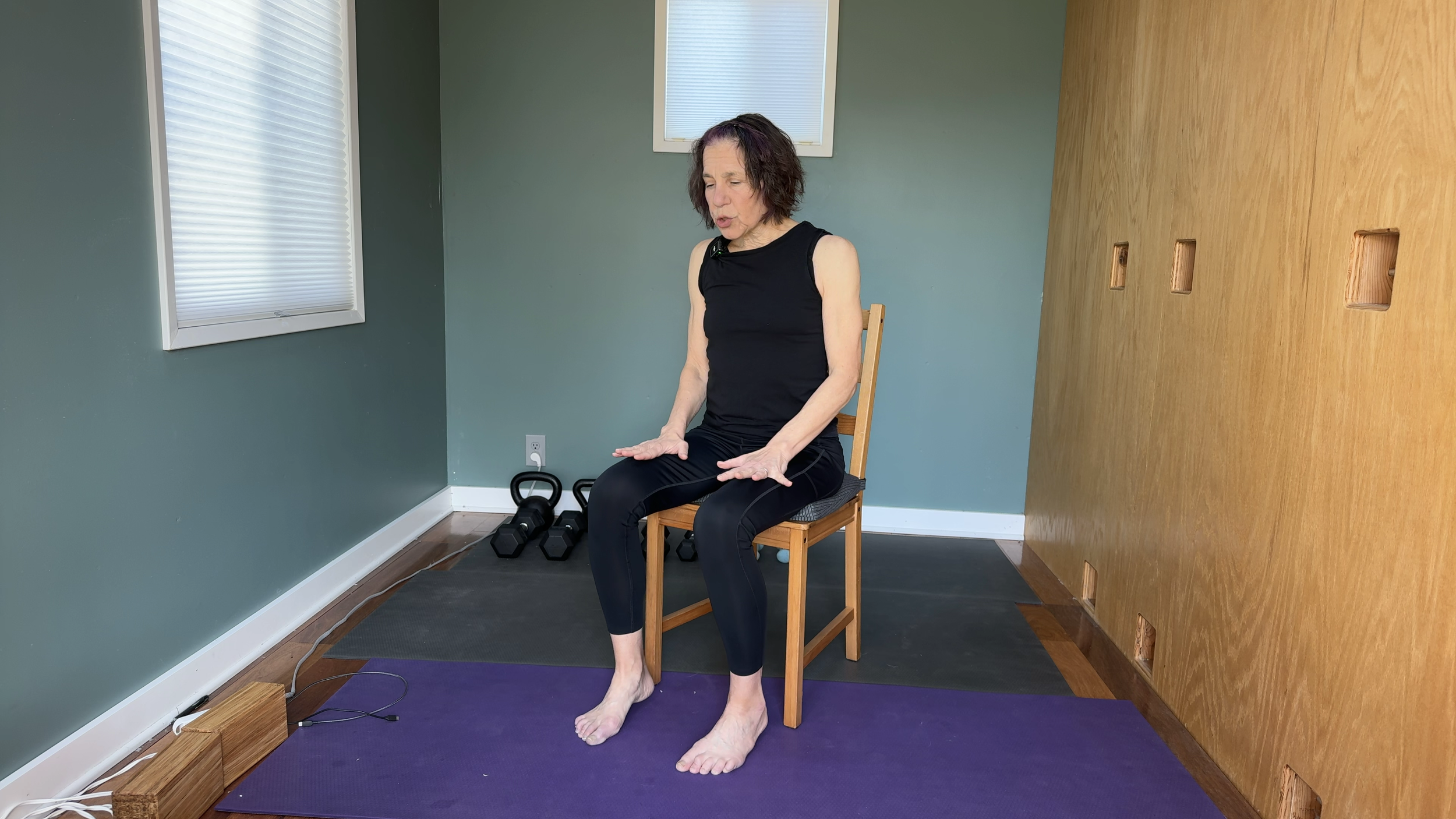
Your ankles hurt because you're not moving them through their full range of motion.
If all you do is basic walking—same surface, same speed, same pattern every day—your ankles never get challenged.
So when you DO ask them to do something different—like go on a hike, take a fitness class, or walk on uneven ground—your ankles are like, "Wait, WHAT are you asking me to do?"
And then they hurt.
Or feel tight.
Or feel unstable.
The fix?
We need to move our ankles so that our body REMEMBERS that we are capable of moving our ankles.
That sounds a bit odd- but when was the last time you moved your ankles through a healthy range of motion?
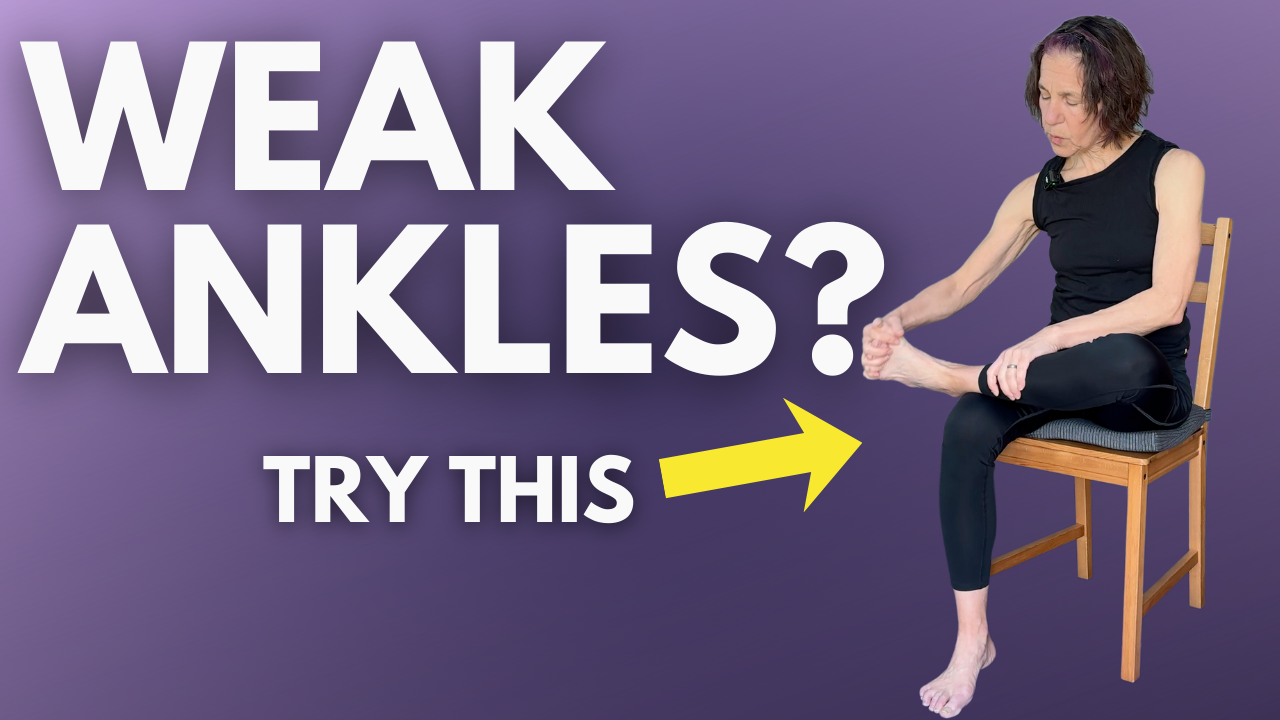
Why Your Ankles Feel Tight and Weak
Here's what's actually happening.
Your ankles are designed to move in multiple directions—not just forward and back like walking does. But if you never put them through their optimal range of motion, they lose that ability. The muscles get weak. The joints get stiff. And then when you try to do something your ankles aren't prepared for, they rebel.
As you work your way through the video above- review the cues below so you can adapt and adjust each exercise so it works for YOUR BODY.
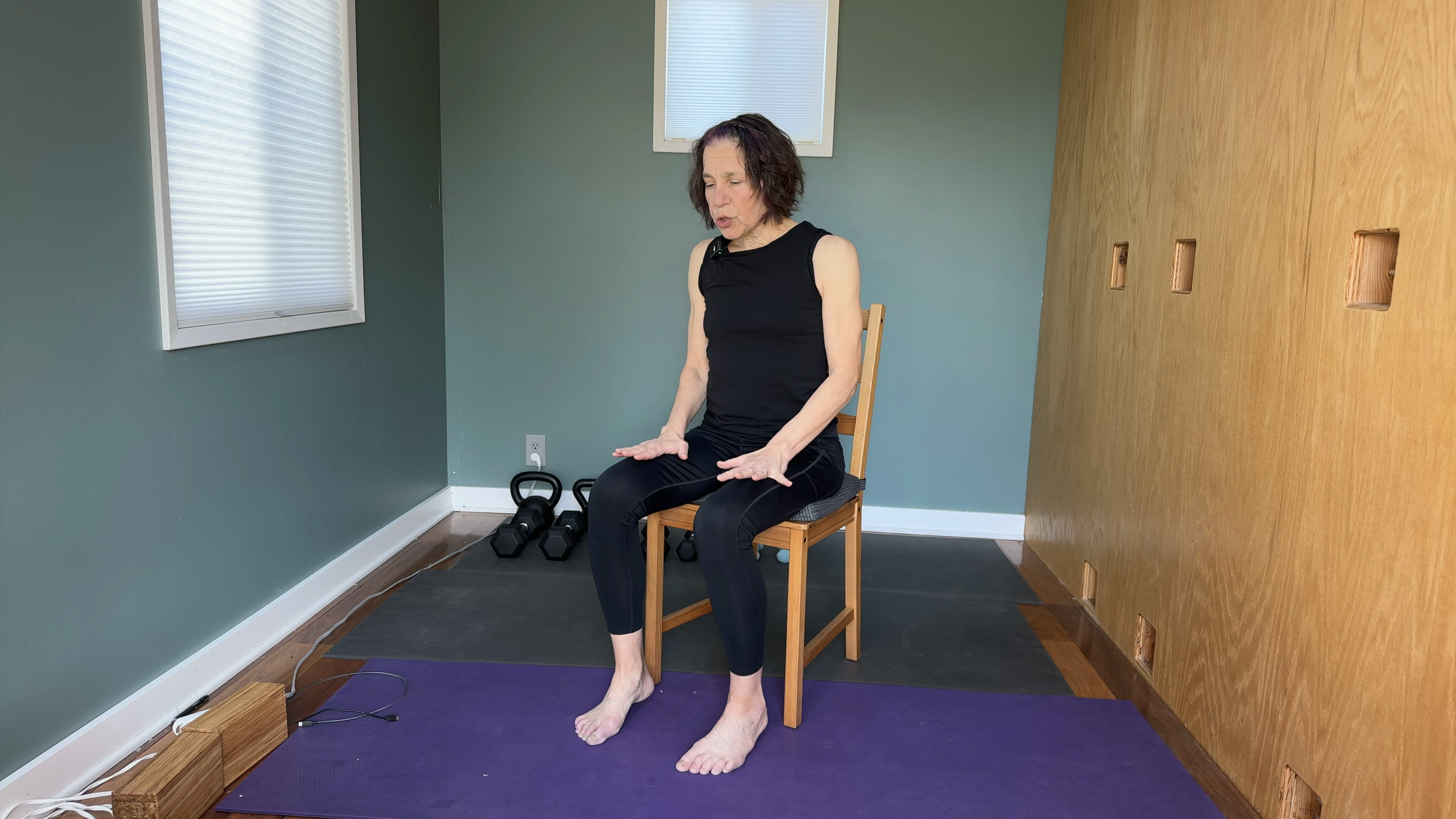
Exercise 1: Basic Heel Raises
This is where you start. This simple movement reminds your ankles they're able to move.
How to do it:
Sit on a chair
Lift your heels and lower them back down
Start small—you're just trying to get blood flow and movement going
Once it feels good, lift higher until you're up on the balls of your feet
Add a pause at the top once that feels comfortable
What you're looking for: A healthy, nourishing range of motion. No pain. Just movement.
Progression: Work up to 20 reps with no pain before you move to the next exercise.
Why does this work? Because you're waking up the muscles in your ankles and calves. You're reminding them they're supposed to MOVE, not just sit there locked in one position.
Exercise 2: Loaded Heel Raises
Once basic heel raises feel easy, you add resistance. And here's what I love about this one—YOU get to decide how much resistance to add.
How to do it:
Place your hands on your thighs
Gently press down as you lift your heels
Even though it doesn't seem like much, this completely changes the exercise
Your ankles now have to work HARDER to lift you up. You're building strength and stability, not just moving through the motions.
Progression: Work up to 3 rounds of 20 reps.
And here's what you'll notice: walking feels BETTER. Your ankles feel more stable. That tightness and pain starts to go away because your ankles are actually STRONG now, not just loose from stretching.
Exercise 3: Ankle Circles with Toe Stretch
This is my favorite because it's a stretch AND a feel-good movement. And it works on your feet AND your ankles at the same time—which is critical because they're directly connected.
How to do it:
Cross one ankle over your thigh (or lie down if sitting doesn't work for you)
Lace one finger between each toe—if this doesn't work, just hold onto your toes
Make big, delicious circles with your ankle
What you're doing here is putting your ankle through a full range of motion WHILE stretching your feet and toes. Because tight feet = tight ankles. They work together.
And yes, it might take a few tries before you can get your fingers between your toes. That's totally normal. Just do what you can.
Why this matters: If your feet are tight and restricted, your ankles compensate. So stretching BOTH gives you better results than just focusing on your ankles alone.
Exercise 4: The Alphabet Challenge (Advanced)
Okay, this one's TOUGH. So don't try this until the first three exercises feel good in your body.
How to do it:
Lace your hands underneath your thigh and extend your knee
"Write" the letter A with your foot (doesn't have to be perfect handwriting)
Then try B, then C
Switch sides and repeat
What you're working on: Ankle mobility AND the way your brain connects to your ankle movement. This is coordination + strength + stability all in one exercise.
You don't have to do the whole alphabet. I do A, B, and C for myself and with my students. That's enough to make a huge difference.
And here's what I love about this one—it's not just mindless reps. You're actually engaging your BRAIN with your body. That connection is what builds real, functional strength that carries over into walking, hiking, and everything else you want to do.
What to Expect When You Do These Exercises
If you do these four exercises consistently—I'm talking 3-4 times a week—here's what changes:
Your ankles feel STRONGER when you walk
That morning stiffness starts to disappear
You feel more stable on uneven ground
Your ankles don't hurt when you try to exercise
You can hike, walk, and move without worrying about your ankles giving out
I've seen this with my own body and with my students. Your ankles don't have to be a problem. They just need smart, progressive movement designed for YOUR body.
The Bottom Line
Your ankles need strength and mobility training—not random stretches or being told "that's just aging."
These four exercises work because they:
Put your ankles through their full range of motion
Build strength progressively (you're not just stretching)
Challenge your brain-body connection
Give you modifications so you can start where YOU are
Exercise works when you know how to work it.
Got a question- reach out through the contact page.
Want a full-body strength workout designed for women over 50?
Try my free 30-minute strength class with clear cues and modifications for real bodies → https://www.winilinguvic.com/free-strength-training-class