Strength Training for Osteoporosis: What Most Programs Get Wrong
If you have osteoporosis or osteopenia, you've probably been told to exercise. What you haven't been told is what kind of exercise — or why most programs designed for women with osteoporosis are missing a critical piece.
I've been a strength coach for 45 years. I've worked with hundreds of women over 50 with low bone density.
And the gap I see again and again — in online programs, in gym classes, in well-meaning advice — is the same every time.
Programs are either too cautious to be effective, or they're missing the one type of training that research shows actually builds bone.
Here's what a complete strength training program for osteoporosis actually looks like.
What Most Osteoporosis Exercise Programs Get Wrong
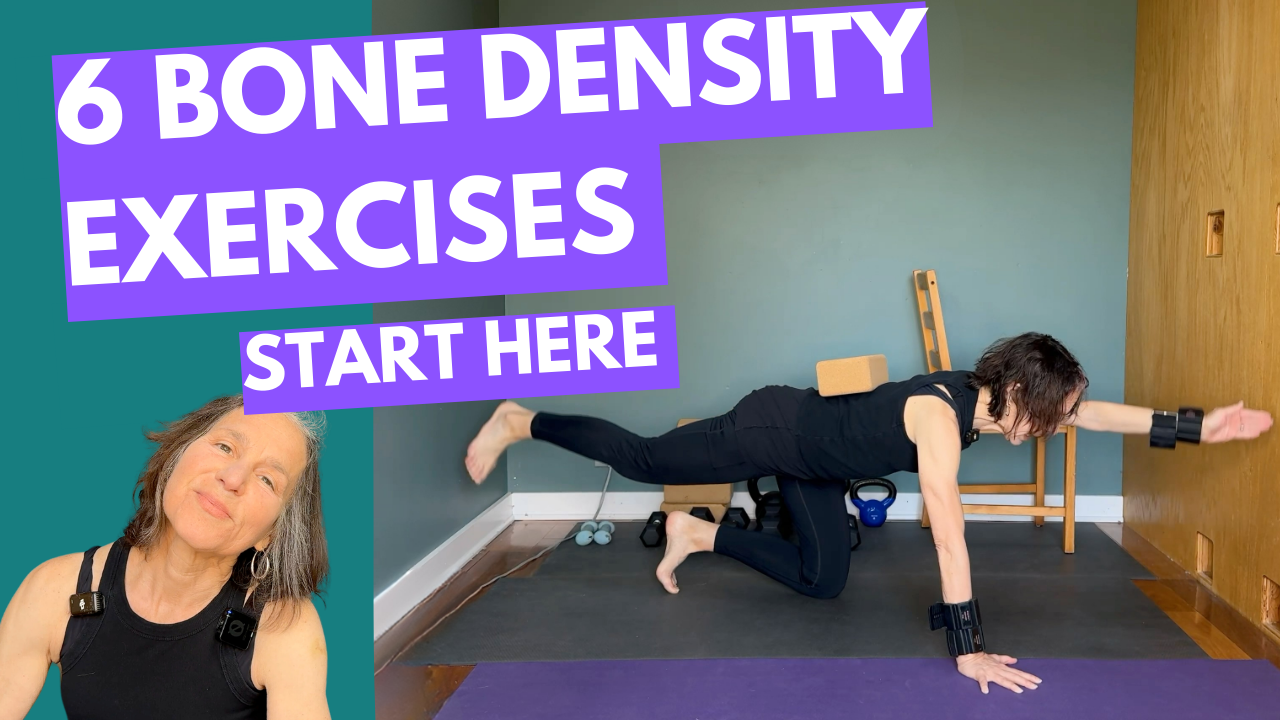
Most programs are either inconsistent or incomplete. Women start, stop, start again — and never build the progressive load their bones actually need. Or they follow a program that includes strength and mobility but leaves out the third essential component entirely: impact training.
Impact training — simple exercises like heel drops, stomp squats, and controlled jumps — sends a mechanical signal directly to your bones to build density. It doesn't require a gym. It doesn't require equipment. And it's one of the most well-researched interventions for osteoporosis that most online programs never include.
If your current program doesn't include all three — strength, mobility, and impact — it's incomplete.
The Belief That's Keeping Women with Osteoporosis Weaker
Here's what I hear constantly: "I'm afraid to do anything. I don't want to fall."
I understand the fear. A fracture is a serious thing. But the answer to that fear is not rest — it's training. Specifically, the kind of training that builds the balance and stability that reduce your fall risk in the first place.
Doing nothing doesn't protect you. It leaves you with less muscle, less stability, and less bone density than you had before. The women I've worked with who trained consistently — with the right program — move through the world with far less fear than when they started. Not because their diagnosis changed. Because their body changed.
The 3 Components Every Osteoporosis Program Needs
A complete program for women with osteoporosis has three non-negotiable pieces:
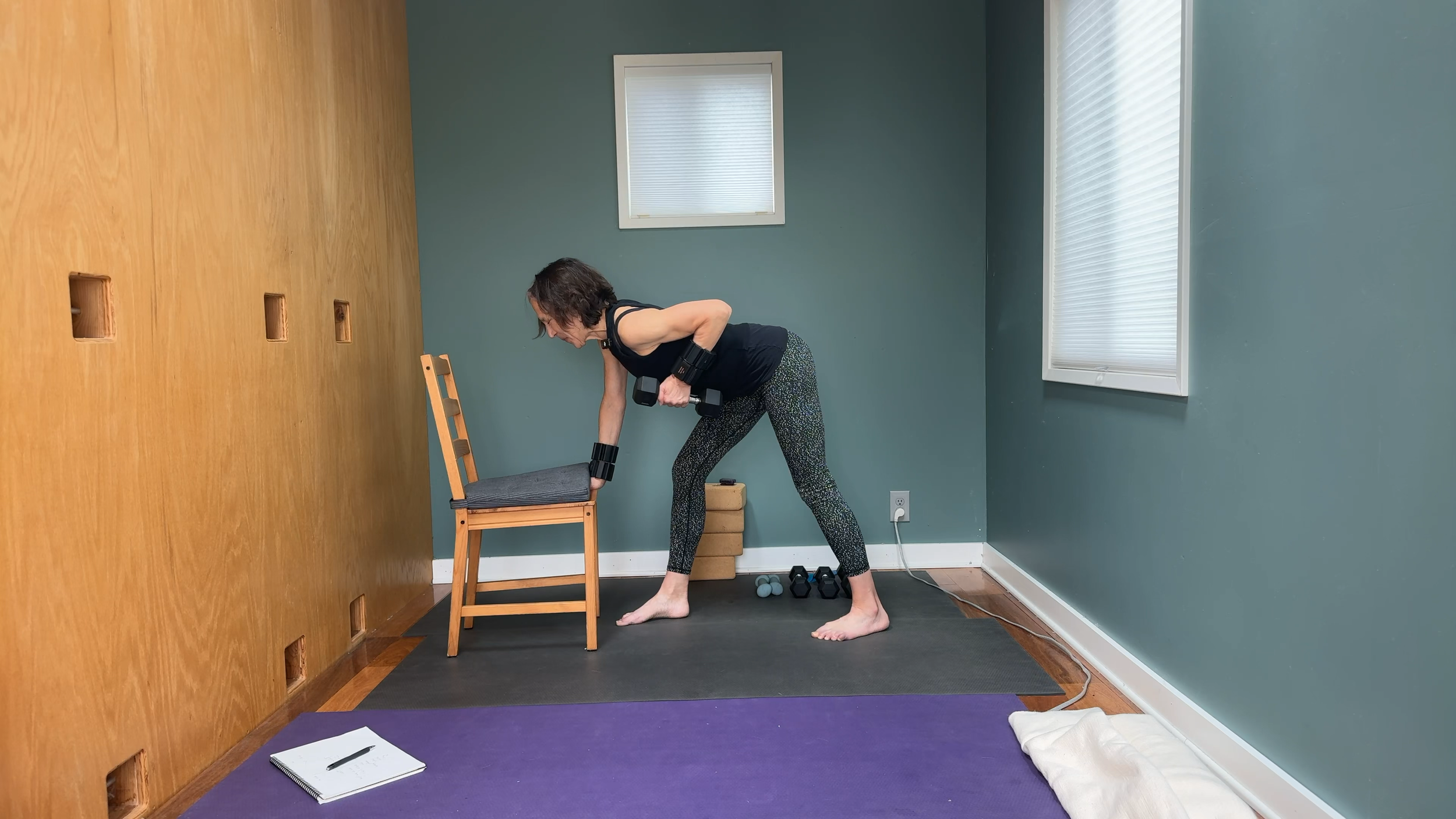
Strength training. Progressive resistance work — meaning you're increasing the challenge over time. Bones respond to load. Muscles protect joints and improve stability. This is the foundation.
Mobility training. Not just stretching. Functional mobility work that keeps your joints moving the way they're supposed to — so you can squat, reach, carry, and get up from the floor without pain or restriction.
Impact training. The missing piece. Controlled impact exercises like heel drops and stomp squats send mechanical signals to your bones that trigger new bone formation. They start simple, have beginner-friendly variations, and progress over time. Most programs skip this entirely. They shouldn't.
Impact Training for Osteoporosis: Where to Start
Impact training sounds intimidating when you have osteoporosis. It's not — when it's taught correctly.
The two exercises I start every woman with:
Heel drops. Rise up onto your toes, then let your heels drop firmly to the floor. That's it. Simple, controlled, and directly stimulates bone density in the heel and spine. You can hold a chair for balance. You can progress by adding reps, speed, or eventually light weight.
Stomp squats. A squat with a controlled stomp at the bottom. The impact travels up through the leg bones into the hip and spine — exactly where women with osteoporosis most need it. Beginner versions are gentle. As you get stronger, you can progress the intensity.
Both exercises are safe when taught with proper form and appropriate progressions. Both are missing from most online osteoporosis workout programs.
What does 30 days of our regular training program feel like?
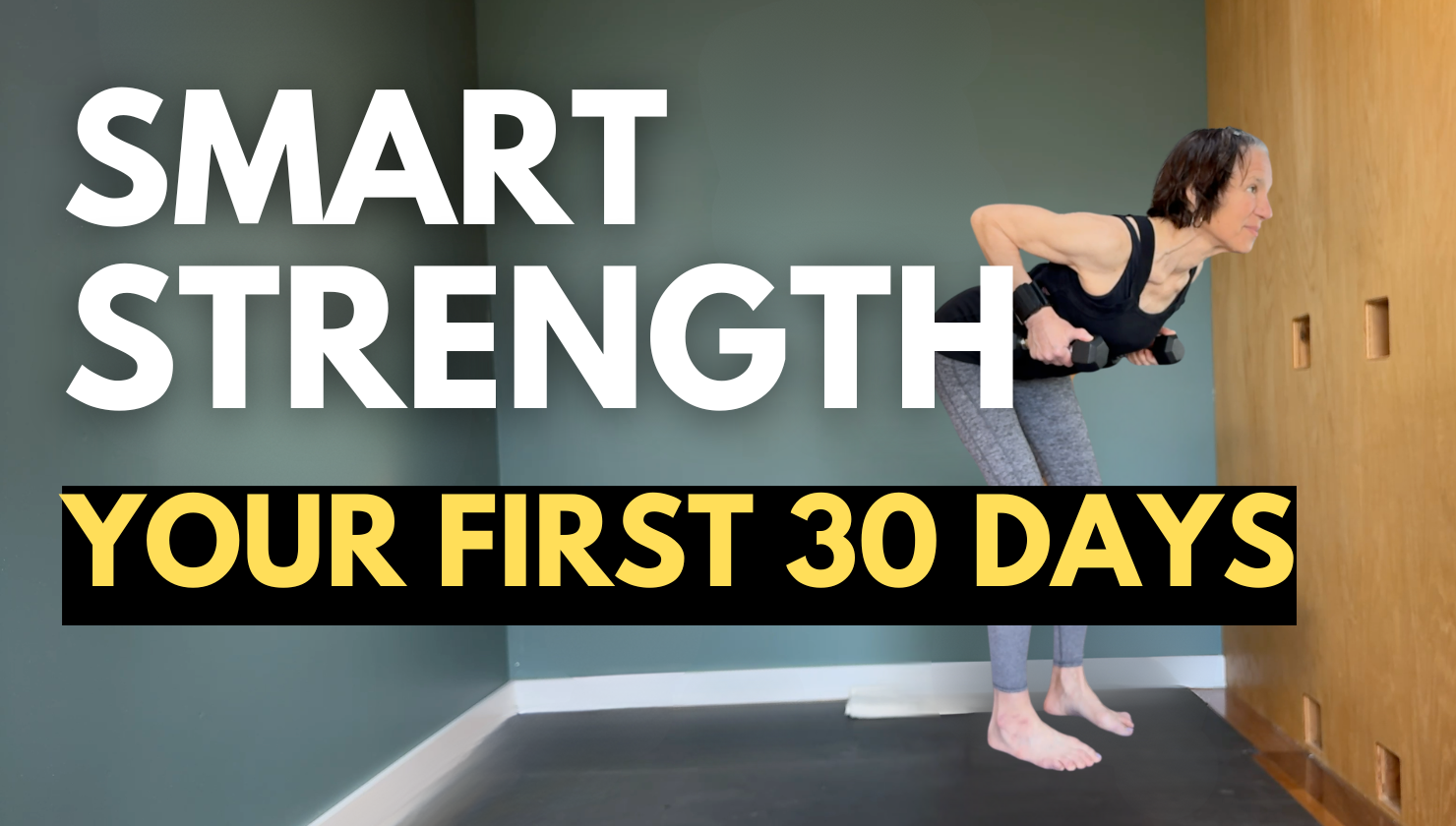
Thirty days into our Smart Strength Program that includes strength, mobility, and impact training, women tell me the same three things: they feel confident, competent, and capable.
Confident — because they understand what they're doing and why.
Competent — because their balance, stability, and strength are measurably better.
Capable — because their body is doing things they weren't sure it could do a month ago.
Try Our Smart Strength Program Designed for Women Over 50
Every class inside The Elevate Practice includes strength, mobility, and impact training — designed specifically for women over 50 with real bodies and real limitations.
Clear progressions, real modifications, and always an explanation of why each exercise is in the program.
Our Smart Strength Program gets you started training safely and effectively at home.