Best Online Workouts for Women with Osteoporosis: What Works
If you have osteoporosis or osteopenia and you're trying to find a safe online workout program, you've probably already hit a wall.
Hundreds of videos, zero clarity on which ones are actually designed for low bone density — and which ones could quietly put your spine at risk.
I've been a strength coach for 45 years. I've worked with hundreds of women over 50 with low bone density — women who were scared to move, doing the wrong things, or totally confused by conflicting advice. Here's what I know: the right strength training for osteoporosis doesn't look like what most online programs are selling.
This post breaks it down.
What works, what doesn't, and exactly what to look for.
The #1 Mistake Women with Osteoporosis Make When They Get Their Diagnosis
They either stop moving because they're scared — or they turn to yoga, assuming it's the safest option.
Both are mistakes.
Stopping exercising is not what your body needs although it is totally understandable to be nervous about what is safe.
Bone density responds to progressive load — meaning the right kind of resistance training is one of the most effective tools you have.
Exercise is a tool that we can learn HOW to sue to build strength.
And there are SO many things about aging that we cannot control, but exercise is something we can add in that makes a SIGNIFICANT difference.
And yoga?
I love it and I've taught it for decades — but most yoga classes include deep forward folds and spinal twists that put compressive force on vertebrae with low bone density.
A class taught by someone who specifically understands osteoporosis can absolutely be safe.
The key is to understand what will nourish your and what won’t serve yuo anymore.
Why Most Online Workout Programs Fail Women with Osteoporosis
Generic online programs are built for the general population and then slapped with a "women over 50" label. That's not the same as a program designed for osteoporosis or osteopenia. The difference matters — a lot.
Generic programs fail in two specific ways:
They don't tell you what to avoid. A warning like "consult your doctor" with no actual guidance leaves you more confused than when you started. If the program doesn't specifically name the movements that are risky for osteoporosis, it wasn't designed for you.
They include exercises that are dangerous for your spine. Crunches, sit-ups, and Pilates roll-downs are in thousands of online workout videos — and all three involve loaded spinal flexion. For women with low bone density, that's a fracture risk hiding in plain sight.
Exercises to Avoid If You Have Osteoporosis or Osteopenia
Before I tell you what works, you need to know what to skip — even if a popular instructor is teaching it.
Loaded spinal flexion — crunches, sit-ups, Pilates roll-downs, and any exercise that rounds your spine under load. Your core absolutely needs to be strong. But there are far better ways to train it that don't put your vertebrae at risk.
Loaded spinal twists — twisted lunges, weighted rotational movements, deep yoga twists. These put compressive and shear forces on the spine that low bone density can't safely absorb.
Deep forward folds — common in yoga: seated forward bends, standing forward folds. These flex the spine under load. If your instructor isn't calling these out for women with osteoporosis, they don't have the training to be teaching you.
What Actually Works: How to Choose a Safe Strength Training Program for Osteoporosis
The right program for osteoporosis isn't "gentle." It's specific. Here's what to look for:
It's explicitly designed for osteoporosis or low bone density. Not just women over 50. The instructor should name the movements to avoid and explain why — upfront, not buried in fine print.
It includes progressive resistance training. Bone responds to load. Walking is good. Stretching is good. But neither builds bone density the way progressive strength training does. You need to be working against resistance and increasing that challenge over time.
It has real modifications — not afterthoughts. Modifications for women with osteoporosis should be taught with the same care and detail as the primary movement. If the instructor throws out "or you can do this instead" and moves on, that's not a modification. That's a disclaimer.
The instructor explains the why. Women with osteoporosis need to understand what's happening in their bodies — not because they need to be educated, but because that understanding makes every movement safer. In class and in the rest of your life.
What 30 Days of the Right Osteoporosis Workout Program Actually Feels Like
After 45 years of teaching, I've watched what happens when a woman finally finds a program built for her body. It's not dramatic. It's better than that.
She feels stronger — in real daily-life ways. Stairs, groceries, getting up from the floor. She feels steadier on her feet. The fear that had been following her around starts to ease — because she finally understands what's safe and what's not, and she's building a body she can trust. She's in control. And she's looking forward to the next class instead of dreading it.
That last part — looking forward to it — is not a small thing. The best workout program is the one you actually show up for. When a class is designed for your body, you show up.
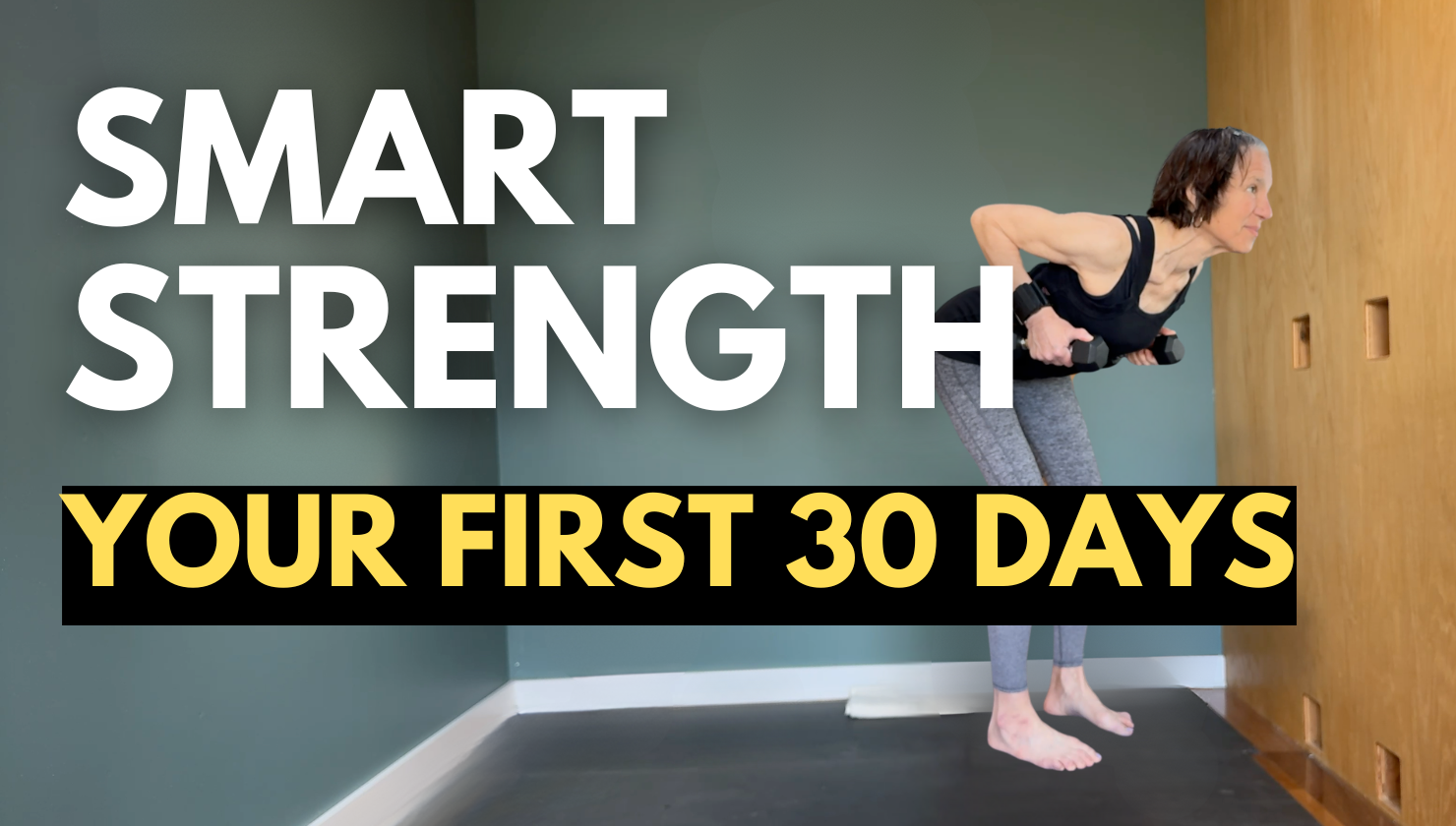
Try Smart Strength designed to build bone density and strength
Every class inside our SMART STRENGTH series is built with osteoporosis and low bone density in mind — the right movements, real modifications, and always an explanation of why.
No guessing whether something is safe for your body.