Can You Build Bone Density After 60? Here's What Happened
Bone Loss After 60: How Laura Got Stronger
Most women who get a bone loss diagnosis after 60 hear one thing: be careful. So they stop lifting. They scale back. They switch to low-load classes and wait to feel safer. And their bones keep thinning — not because they moved too much, but because they stopped moving in the ways that actually matter.
This is the case study of my client Laura. She was 61 when she was diagnosed with osteoporosis. Active, independent, and suddenly terrified to pick up a weight. She didn't know what was safe, what would help, or where to begin.
Here's exactly what we did — and why it worked.
Why Women With Osteoporosis Stop Exercising
When you get a bone density diagnosis, you're told your bones are thinning, that fracture risk is higher, and that you need to "be careful." What most women hear is: stop doing the things you love. Stop lifting. Stop jumping. Maybe just stop moving altogether.
That fear is exactly what accelerates bone loss.
Bones respond to load.
When you stress them — with resistance training, with impact, with weight — they signal your body to maintain and build density.
When you STOP loading them- in other words when you stop exercising there is no stimulus for for our bones to get stronger.
So what happens when women first hear that they have osteoporosis osteopenia or little bone density is they panic.
Always check with your doctor- and then find a way to work with a sensible plan to build strength.
Why Most Exercise Programs Fail Women With Bone Loss
Most women in Laura's situation try one of three things and due to the overwhelming amount of information out there (some good and some silly)- what winds up happening is NOT what is needed.
Generic fitness programs. Most programs for fitness, or strength weren't built for women with osteoporosis. And if you don’t know what to do (or not to do) those programs are not very useful. They don't account for spinal loading, impact modifications, or the specific muscles that protect your hips and spine. A program built for a 35-year-old who wants to lose weight is not the same as training with strength and mobility as the goal.
Physical therapy exercises. PT is excellent for rehabilitation. But most women finish PT with a handout of exercises and no idea how to turn that into a progressive plan. The exercises stop. The progress stops. The exercises are often EXCELLENT- but the challenge is how to integrate those exercises on a consistent basis.
Yoga and Stretch classes. Yoga has real benefits for flexibility and stress. But it does not load your bones the way resistance training does. It is not enough on its own to build or maintain bone density — your skeleton needs to be challenged, not just stretched. And many yoga poses focus too much on forward bending- I review that here.
What Laura needed — what most women with osteoporosis or low bone density need — is a structured program that loads bones progressively, protects joints, and builds overall strength and mobility,
The Strength Training Plan for Bone Loss After 60
There is no single exercise that fixes bone loss. What works is a structured approach that addresses four things together.
Strength Training for Bone Density
Loading your bones with resistance is the most evidence-based strategy for slowing bone loss and improving bone density. We started with what Laura could do safely and built from there.
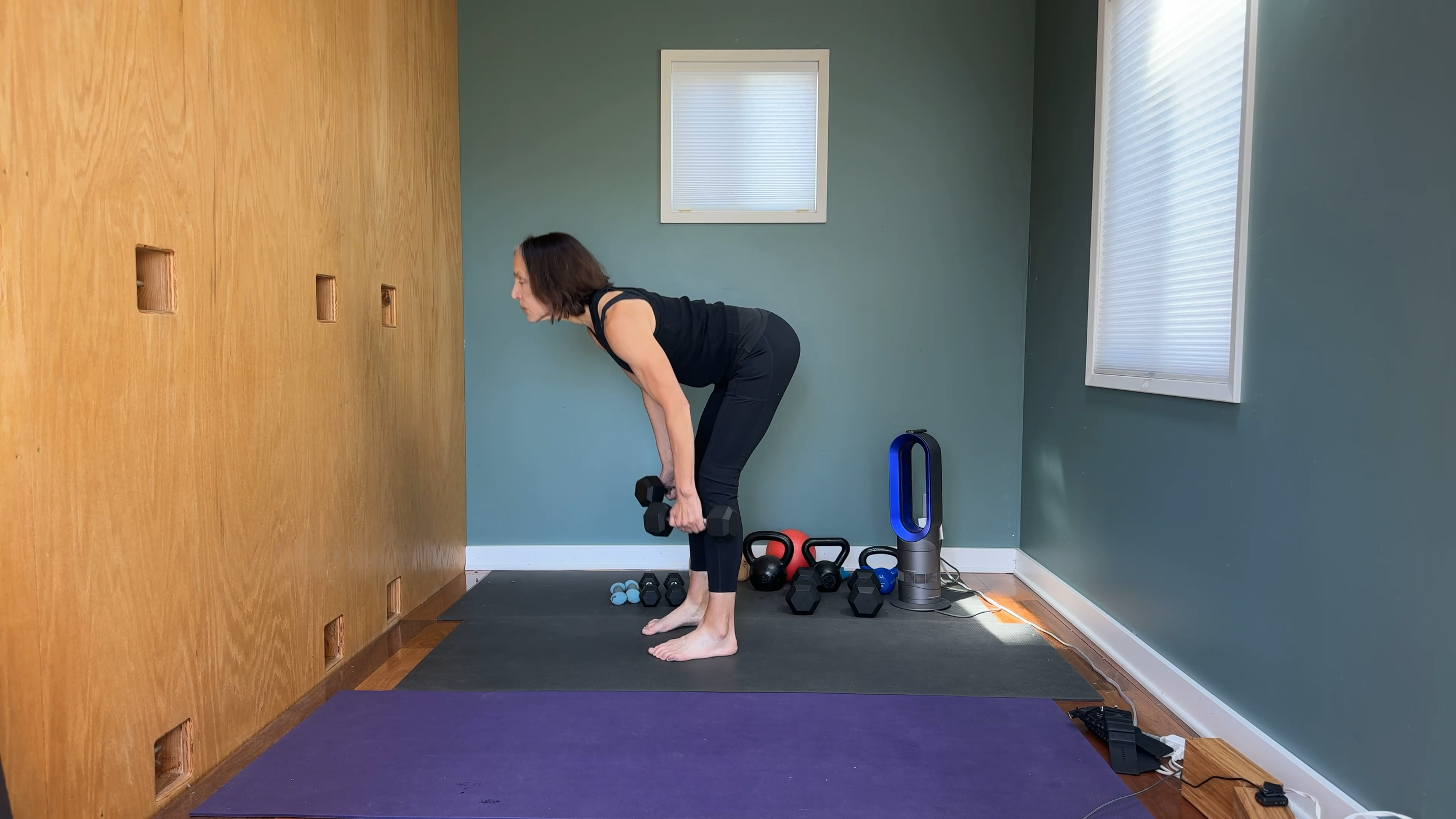
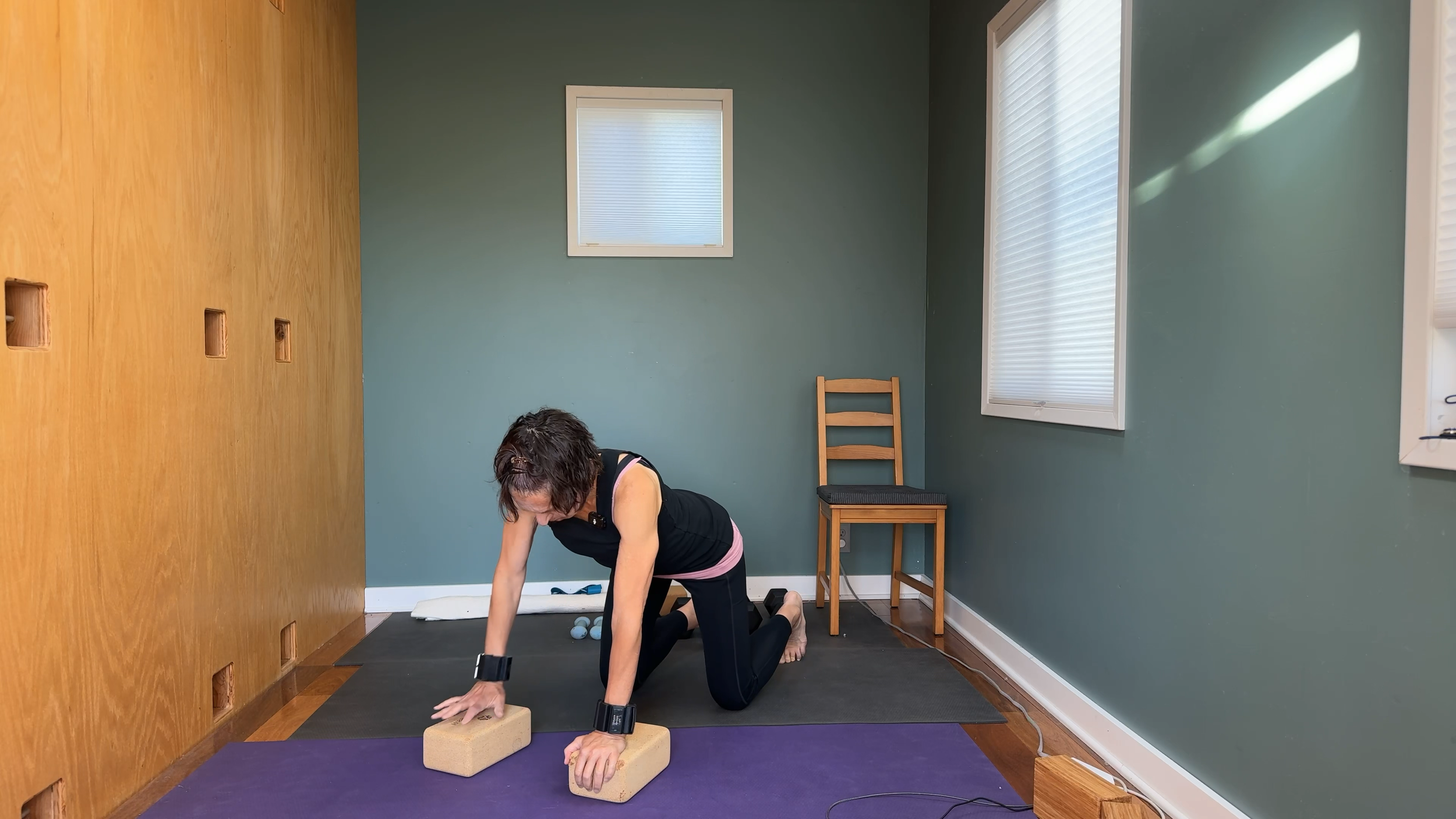
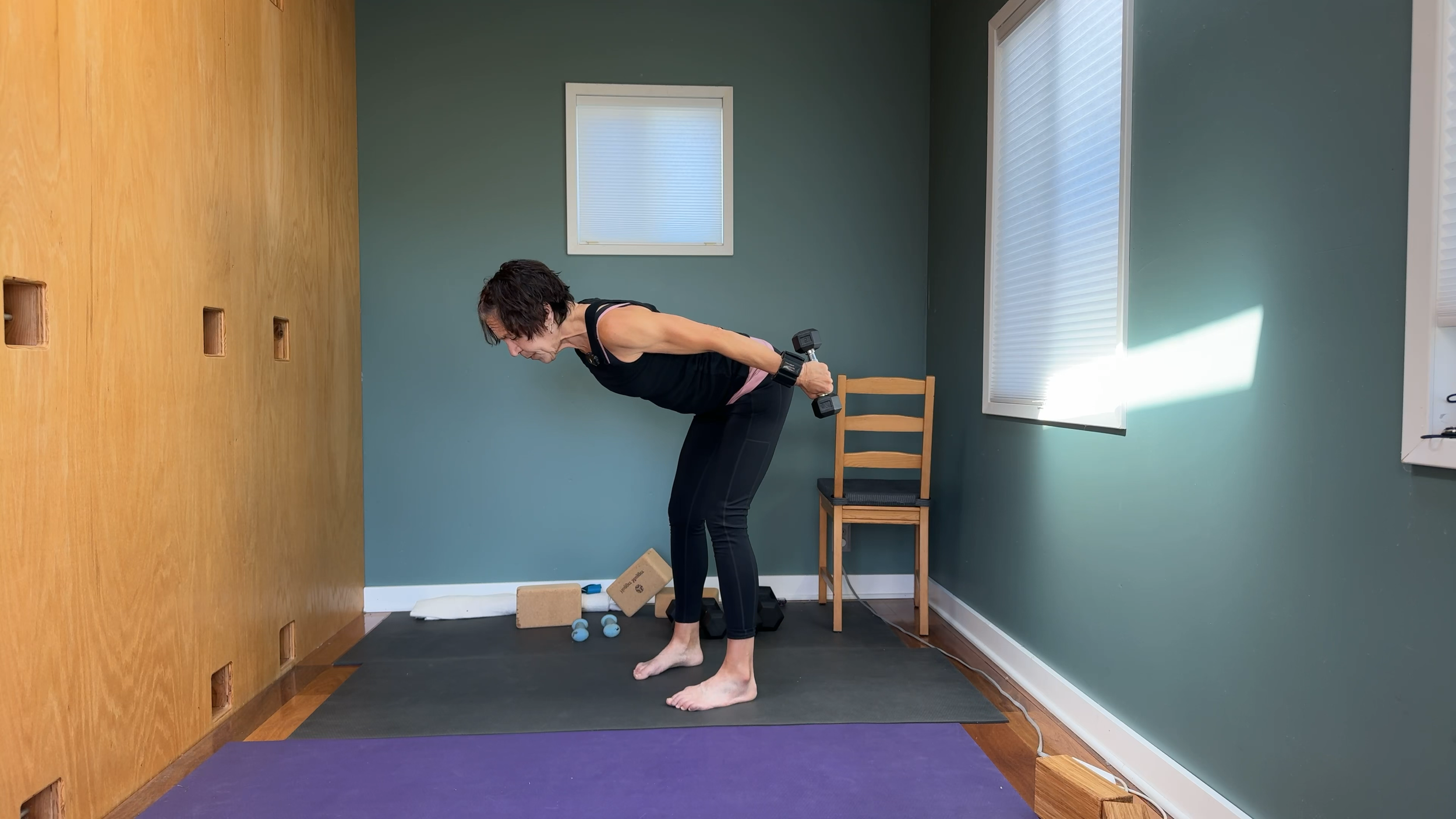
We focused on the areas most affected by osteoporosis: hips, spine, and wrists. Hip hinges, squats, rows, and loaded carries. Every exercise had a clear modification so Laura could train at her level.
Balance Training to Lower Fracture Risk
The hardest thing about balance is ACCEPTING the fact that we will not improve our balance until we work on our balance.
That sounds so simple and I repeat this all the time because balance work, in my experience can be very intimidating.
With all my clients and students we start super simple, there's plenty of exercises to improve your balance that are NOT intimidating or scary.
What happens a lot with women over 50 is because good balance seems so far out of reach we avoid it altogether. What is essential is to start with something you can do. Please see this article for some beginner exercises!
Mobility Work
This is how I view mobility and WHY we prioritize it in our classes and programs.
If we can't move well we can't do anything in good form, so before we focus on strength exercises we need to make sure we can move well!
Before we can build strength effectively and efficiently we need to make sure that our joints are mobile and that is NOT that complicated once you start a simpple mobility routine. that covers the whole body.
Bone Loss After 60: Your Questions Answered
Is strength training safe if I have osteoporosis?
Yes — with the right program. The key is knowing which exercises to avoid (high-impact loading, spinal flexion under load) and which ones to focus on,
Strength training is one of the most well-researched interventions for bone density. Get clearance from your doctor — and then find a coach who works with clients with osteoporosis.
What if I've never lifted weights before?
You start where you are. Laura didn't come in as an experienced lifter. She came in scared. The program started with what she could do safely and we progressed from there.
How quickly will I see results from strength training for bone loss?
Bone density changes slowly — you're looking at months, not weeks. But strength and how you move day-to-day change faster. Most women notice they're moving better and hurting less within the first four to six weeks of consistent training.
Do I need equipment to start?
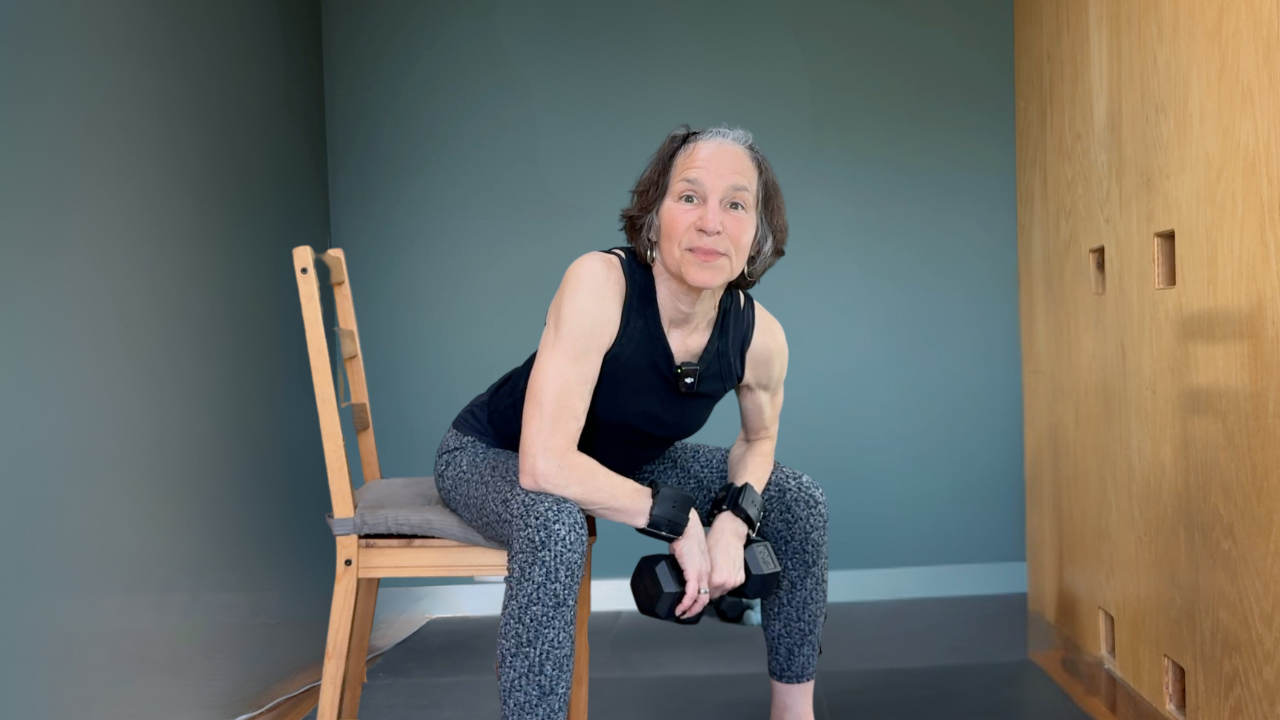
A set of dumbbells is enough. A chair and two sets of light weights to start can make a huge difference. Laura trained at home, and is using one more set of weights so she ha more choices, plus she added in a set of resistance bands.
RESOURCES
Ready to get stronger? Start with my free 5-day strength program — designed specifically for women over 50.
Already know you're ready? Join The Elevate Practice — guided strength and mobility workouts for women over 50. $59/month, cancel anytime.