Exercise After Hip Replacement: Keep Getting Stronger
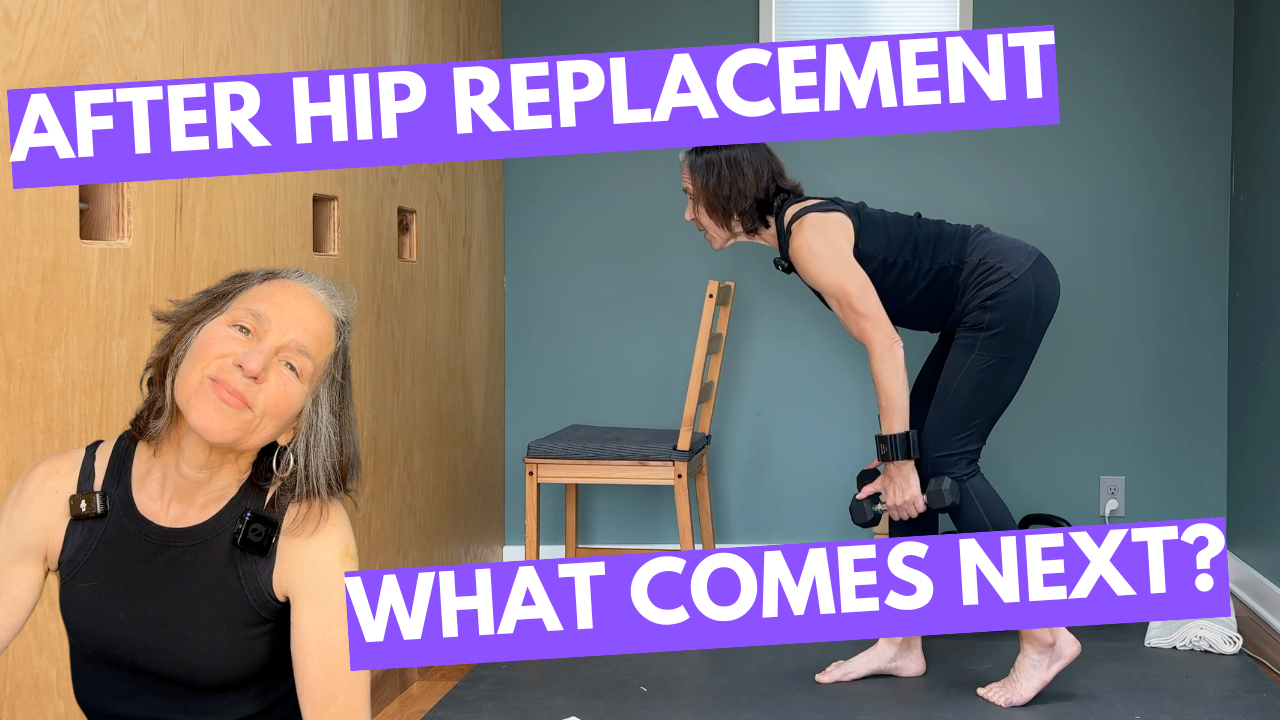
I've had two hip replacements. One in 2022, one in 2025. And the one thing I can tell you from both surgeries, from working with clients who've been through this, and from 43 years of coaching women through their bodies, is this: exercise after hip replacement does not end when physical therapy does.
The key is to KEEP training and building strength.
What happens when physical therapy ends
Here's the pattern I see over and over.
You get the hip replacement.
Surgery goes well. You start physical therapy, and depending on your insurance, you get somewhere between two sessions and six weeks of real work. Your physical therapist gets you walking steadily, rebuilds some basic strength, works on your balance.
And then your sessions end.
And you think you're done.
So you go back to your walks, your gardening, your pickleball.
Which is great, that's exactly why you got the hip replaced in the first place.
But often you stop doing the exercises.
Maybe your physical therapist gave you a sheet and it went under a pile somewhere. \
That is why I want to remind you to KEEP training.
Keep strengthening the glutes, keep working on balance, keep getting STRONGER.
What physical therapy gives you, and what it doesn't
Physical therapy after hip replacement is designed to get you safe and functional. Walking without a walker. Getting in and out of a chair. Basic balance. Managing the precautions so your new joint stays where it belongs.
What oftBut physical therapy is not designed to make you stronger than you were before surgery. It's not built to develop the glute strength and balance that keeps you hiking two years from now, or getting up off the floor with your grandkids, or carrying groceries without grabbing the counter. That's a different goal. And it requires a different approach.
After hip replacement, you need to keep training.
Smart, progressive training that builds on what physical therapy started.
Your muscles need more than physical therapy gave them
You'll recognize a lot of the exercises we do in our classes because they're based on the same principles. In physical therapy, you probably did side-lying hip work, clamshells, basic hip abduction, to wake up the muscles on the outside of the hip and glute. We keep doing those, but we add a resistance band, a ball, a small weight.
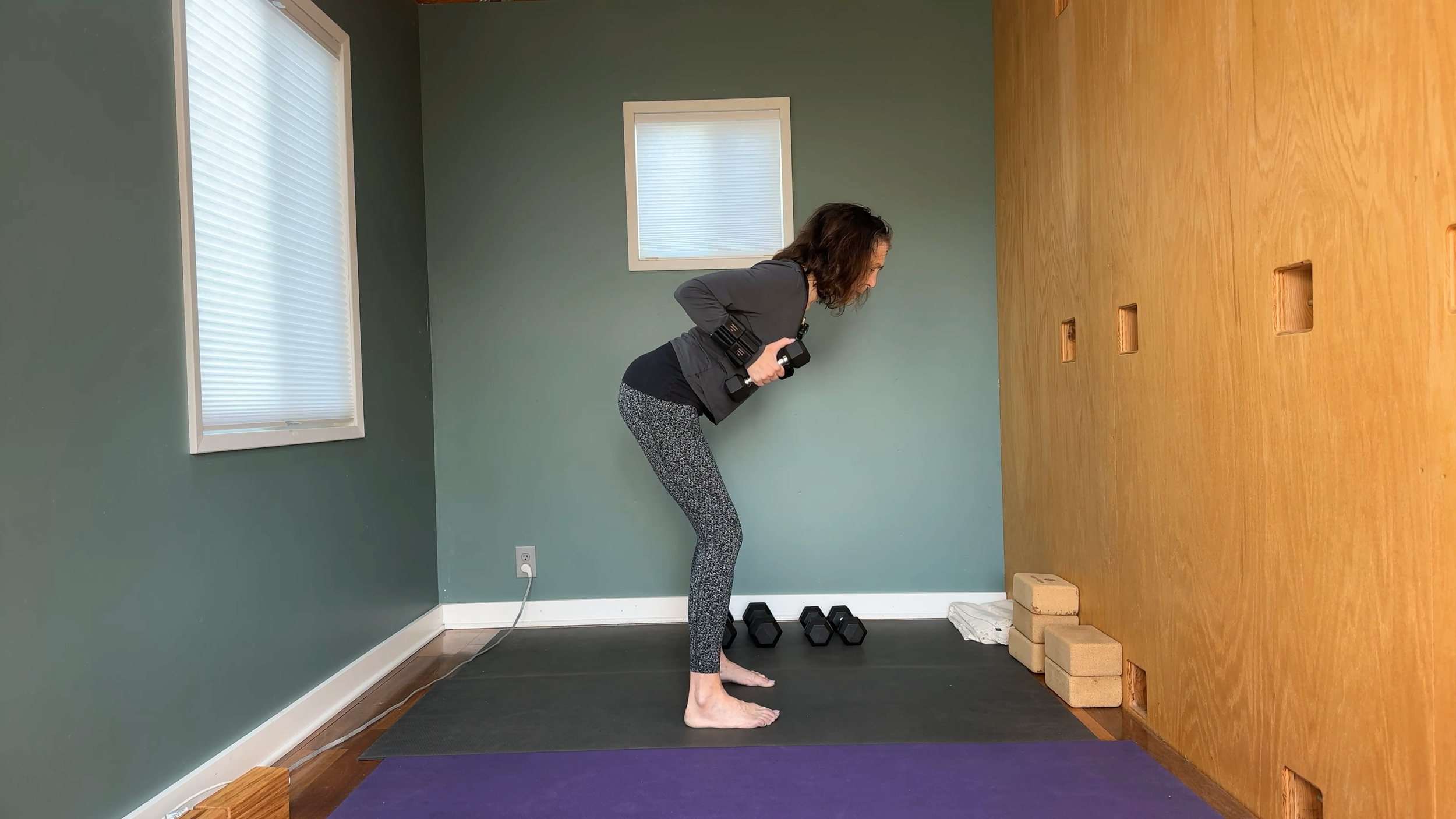
Balance work is the same story. Early physical therapy gets you standing steadily on two feet. What comes next is standing on one leg. Then adding a reach to that single-leg stance. Exercises like T stands, where you balance on one leg and hinge forward with a long spine, work the glute and hamstring of the standing leg in a way that almost nothing else does. That's the kind of strength that makes you feel solid on uneven ground, on stairs, at your grandkid's soccer game on a grass field.
Sit-to-stands don't retire when physical therapy ends either. We keep them, we slow them down, and eventually we add weight. Because getting up from a low chair, getting up off the floor, that's real life.
Why walking isn't enough
I hear this a lot. "I walk every day, isn't that enough?"
For your heart, your mood, and your sanity, yes, walking is wonderful. But we need to strength train to keep the glutes strong and to be able to KEEP walking.
The mistake I see most often
Women do one of two things after physical therapy ends. They stop completely, assuming they're fixed. Or they go too hard too fast, jumping back into group fitness classes that have no business being their next step, and end up sore, discouraged, and back at square one.
Neither works. What works is progressive training that knows where you are right now and builds from there. You need programming that respects your surgery, your history, and your actual body, and then moves you forward from there.
Where to start
If your physical therapy is done and you're not sure what comes next, start with my free five-day strength training program. It walks you through exercises you can do at home, and on day five you get a full 30-minute guided strength class. You'll know exactly what to do. No guessing, no trying to remember what your physical therapist showed you six weeks ago.
Start the Free 5-Day Program → winilinguvic.com/free-strength-training-program
Exercise works when you know how to work it.