Strength Training for Osteoporosis:Inside a Real Class
The best strength training classes for osteoporosis (and osteopenia) offer guidance so you can adapt and adjust the exercise so they work for you.
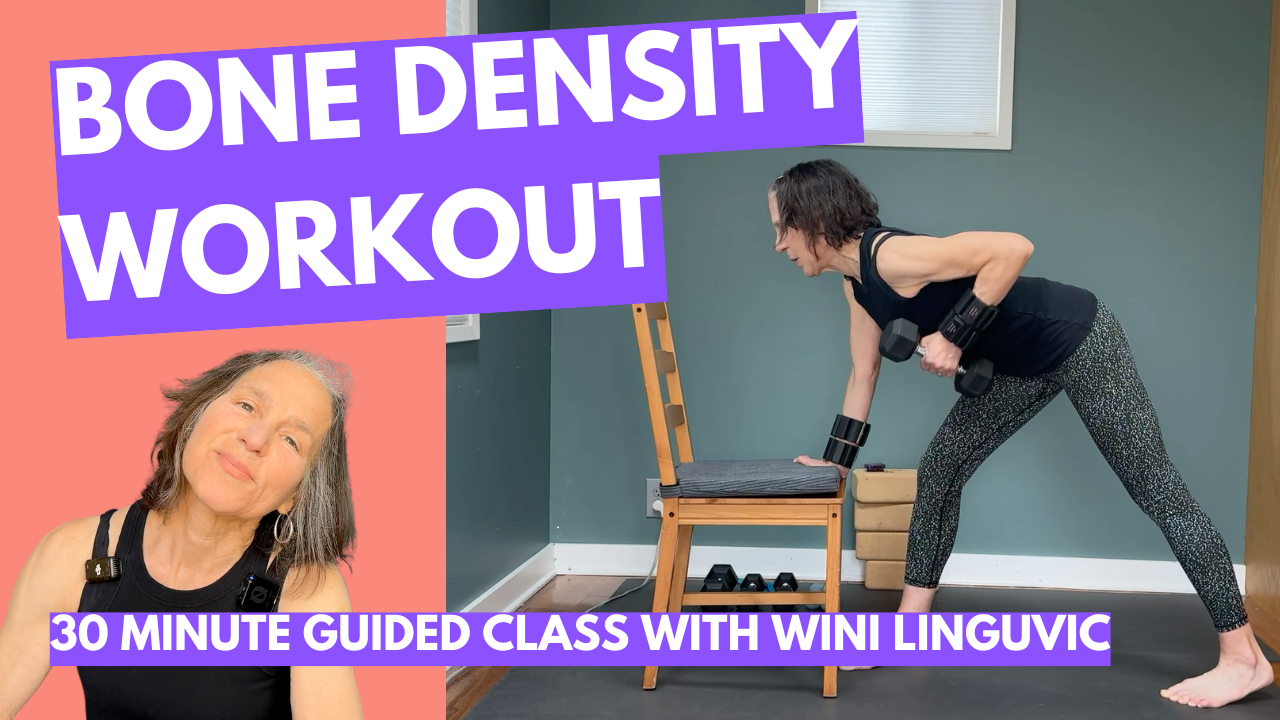
This is a guided and supportive class with squats, deadlifts, hip mobility, halos, and core work. You are welcome to try it at home- and of course you can also watch it and learn how to do the exercises!
And woven throughout the class is guidance on how to increase the challenge, confidently and safely.
Before you press play, grab these:
A sturdy chair
A rolled-up blanket or towel
A resistance band
Two sets of weights — one you consider light, one you consider heavy
Why Most Strength Training for Osteoporosis Doesn't Work
Most general osteoporosis exercise advice gives you a list of exercises without giving you the instructions of how to do them. It can get overwhelming to try and figure out how much weight to use or what exercises to start with.
So you do the exercises. You use the same weights you've always used. You finish the set, feel okay, and have no idea whether any of it is actually doing anything. Weeks pass. Nothing changes.
Here's why: your bones respond to progressive challenge. Not to the same two-pound weights you've been working with for years.
We Do Not Add Weight Until We're Confident and Competent in the Exercise.
This is the rule I keep repeating in this class.
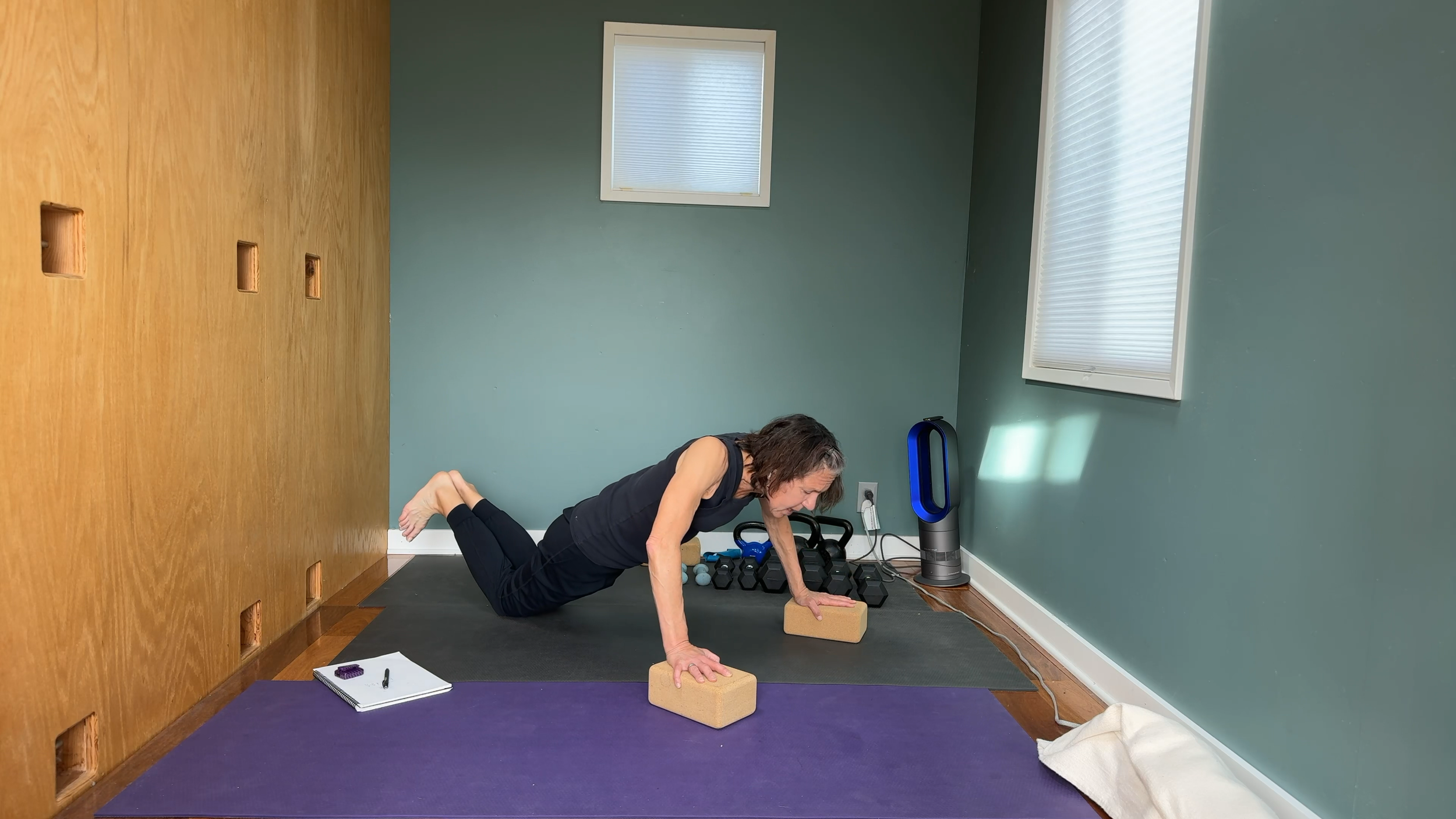
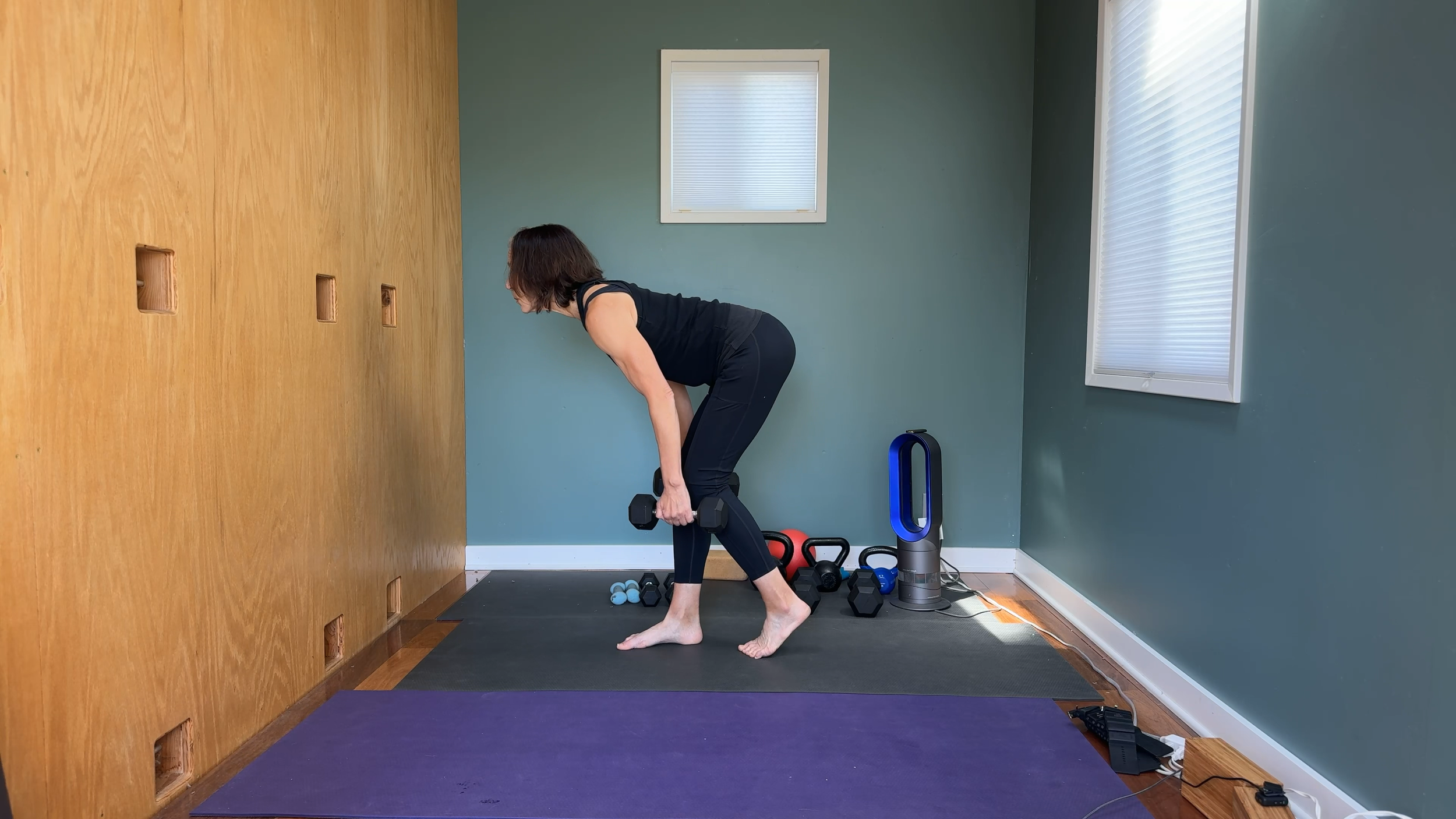
The way to think about it is- you start with bodyweight squats. You start with a light deadlift. You figure out the movement before you add the load, because adding weight to a movement you haven't earned yet doesn't make you stronger. It just makes the wrong things work harder.
When you feel confident in what you're doing, when you feel competent, that's when you pick up something heavier. This is the simple and accessible way to think about strength training!
Here's the test. At the end of a set, ask yourself: could I do ten more? Not easily. Not with energy to spare. Just, could I do them with decent form?
If yes, next set you try a slightly heavier weight. If you're not sure, pick up the heavier weight, do a few repetions reps, put it down and switch out if you need to. You'll learn your body faster that way than any amount of cautious guessing will ever teach you.
Most women with osteoporosis stay with light weights not because they aren't trying but because nobody explained this rule. The weight you've been using for six months without ever increasing it is not going to build more strength.
Your Body Can't Count. It Just Knows When It's Being Challenged.
You don't need to finish every set. You don't need to match what's happening on screen. If ten reps is too much today, you do seven. If fifteen feels easy, you do two more. What matters is that your body is working hard enough to feel it — warm muscles, maybe a little shaky at the end of a set, not sure they want to do one more. That's the signal. That's when your bones get the message to get stronger. Not when you're comfortable. Not when you're coasting.
This also means the number on the weight doesn't matter as much as how the weight actually FEELS in your body that day. Some days your heavy weight feels light. Some days your light weight feels heavy. Both are useful information if you're paying attention.
Notes from our Strength Training For Osteoporosis Class;
Our classes offer more than basic generic instructions- we teach you how to refine and adjust your exercises.
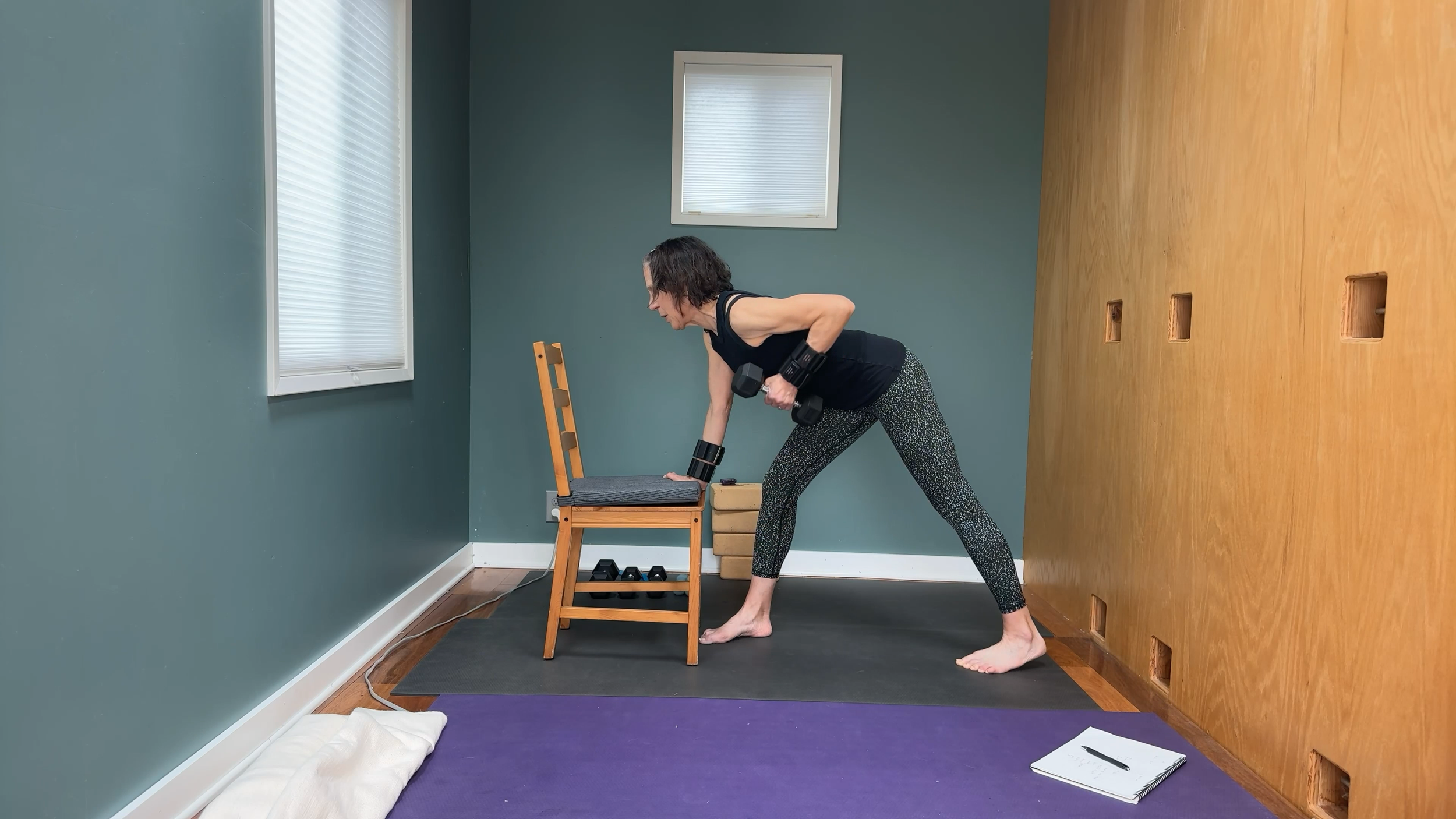
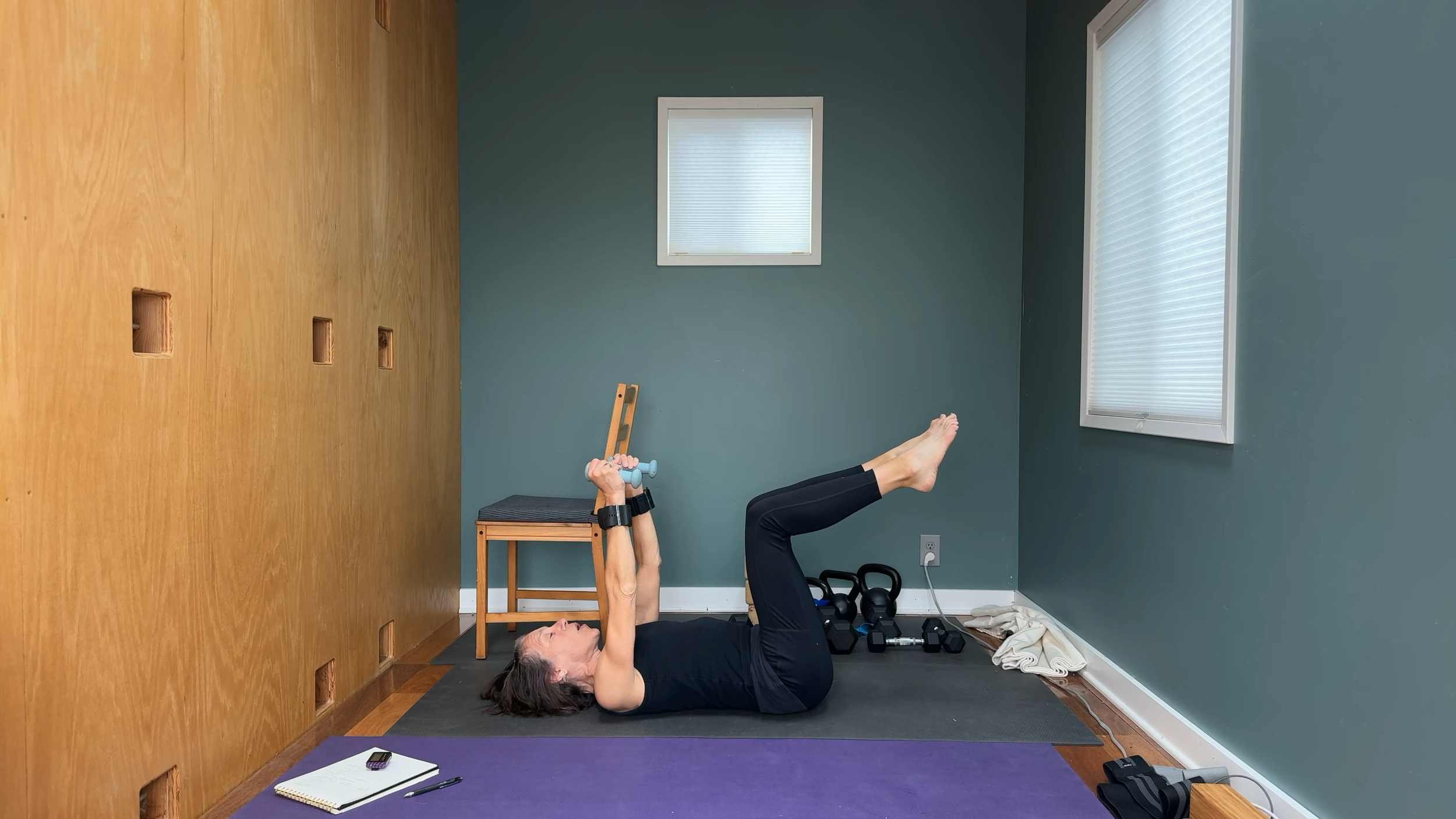
A regular squat is not the same as a heels-elevated squat. A two-legged deadlift is not the same as a kickstand deadlift. A dead bug at the start of a fresh class is not the same as a dead bug after you've already done squats, deadlifts, and halos.
The nooks and crannies are where the real work happens — the muscles that have been sitting quietly while the bigger ones do all the lifting.
We change and adjust exercises on purpose.
Different angle, different emphasis, a slight adjustment to make things feel SAFER.
That's why our classes are SO different from a list of exercises. A list to follow gives you the moves. Our classes give you ways to make the exercises work for you.
There are options in this class for every version of your body on every kind of day. Heels-elevated squats feel too wonky? Come off the blanket. Kickstand deadlift too shaky? Go back to both feet. Halos feel too light? Pick up something heavier.
Exercise Works When You Know How to Work It.
Come back to this class.
Notice what feels different the second time through.
The class will be the same. But by repeating this class- you will NOT be the same- you will be stronger!
If you want more classes like this organized into a real program, so you're building strength and mobility with guidance and support - please reach out directly or start with our free five day program!
FURTHER READING