Can't Do a Squat? 4 Variations That Work
Squats are a GREAT way to build strength, and are important for overall mobility.
We need to be able to squat, to bend, to move- and we lose that ability unless we practice it.
But.
Sometimes squats, especially if you are a beginner or starting to build strength over age 50, don’t always feel so great.
Sometimes we try to squat, or simple strengthen our lower body, and our knees hurt, or back aches, we feel stuck, or our heels come up.
And then we stop trying instead of finding a way that squats could work and feel good while we are doing them.
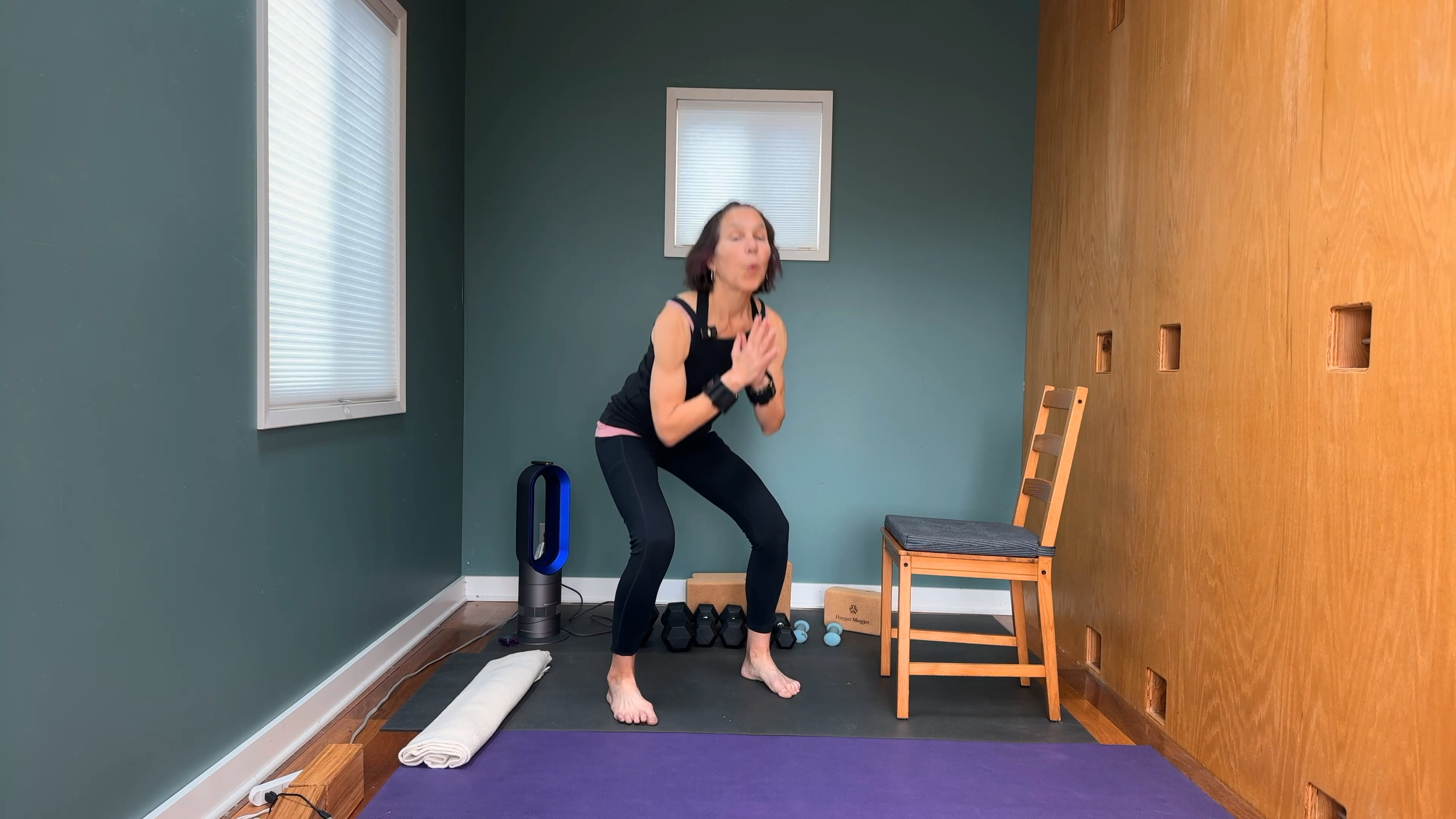
Your knees hurt, your heels came up, your back felt wrong — and you decided squats just aren't for you anymore.
I get it. But here's what I want you to know: squats aren't the problem. The variation you're doing is the problem.
There are squat variations that WILL work. We just need to remembers that every exercise can be adaptable and adjustable.
I've been a strength coach for 44 years and teach variations of squats to my clients so that we find ways to build strength and mobility without injury. Here are four variations of squats that you can try and all you need is one to start with.
Why You Need to Keep Squatting
Every time you sit down and stand up, you're doing a squat. Getting off the couch. Getting out of the car. That's all squatting.
When you stop doing that movement because it hurts, you don't just lose the exercise — you start losing the ability to do the thing itself.
And that happens faster than you think.
You don't need to do a deep squat.
You don't need to squat like you did 20 years ago.
You need to find the squat variation that works for YOUR body — and get stronger doing that one.
That's it.
More about strength training HERE.
Start Here: The Sit to Stand
Even if you think you can do a regular squat, I want you to start here. I suggest it to everyone because it locks in your form before anything else.
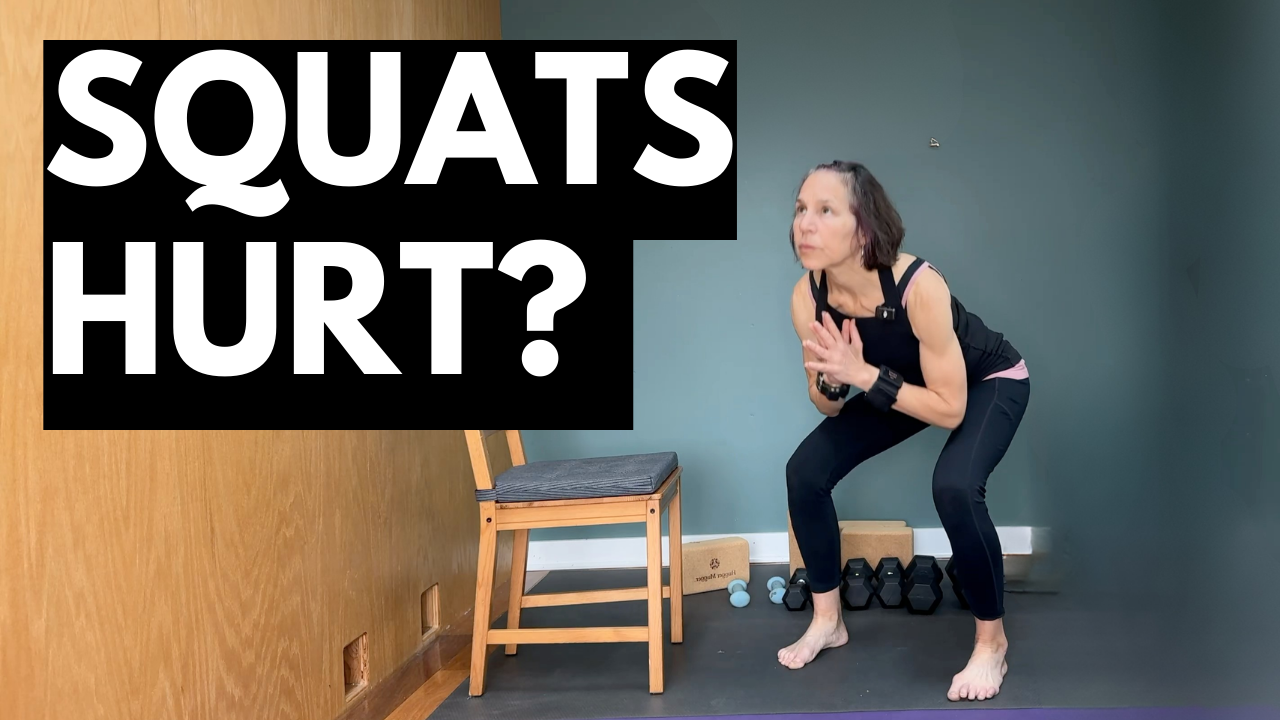
Sit in a sturdy chair. Put your hands on your thighs and push down. This does two things — it stabilizes your body, and it reminds you to keep your back long. There should be a feeling of spaciousness in your back and steadiness in your lower body.
Now push your hands into your thighs and stand up. Then sit back down quietly and carefully. That's the exercise.
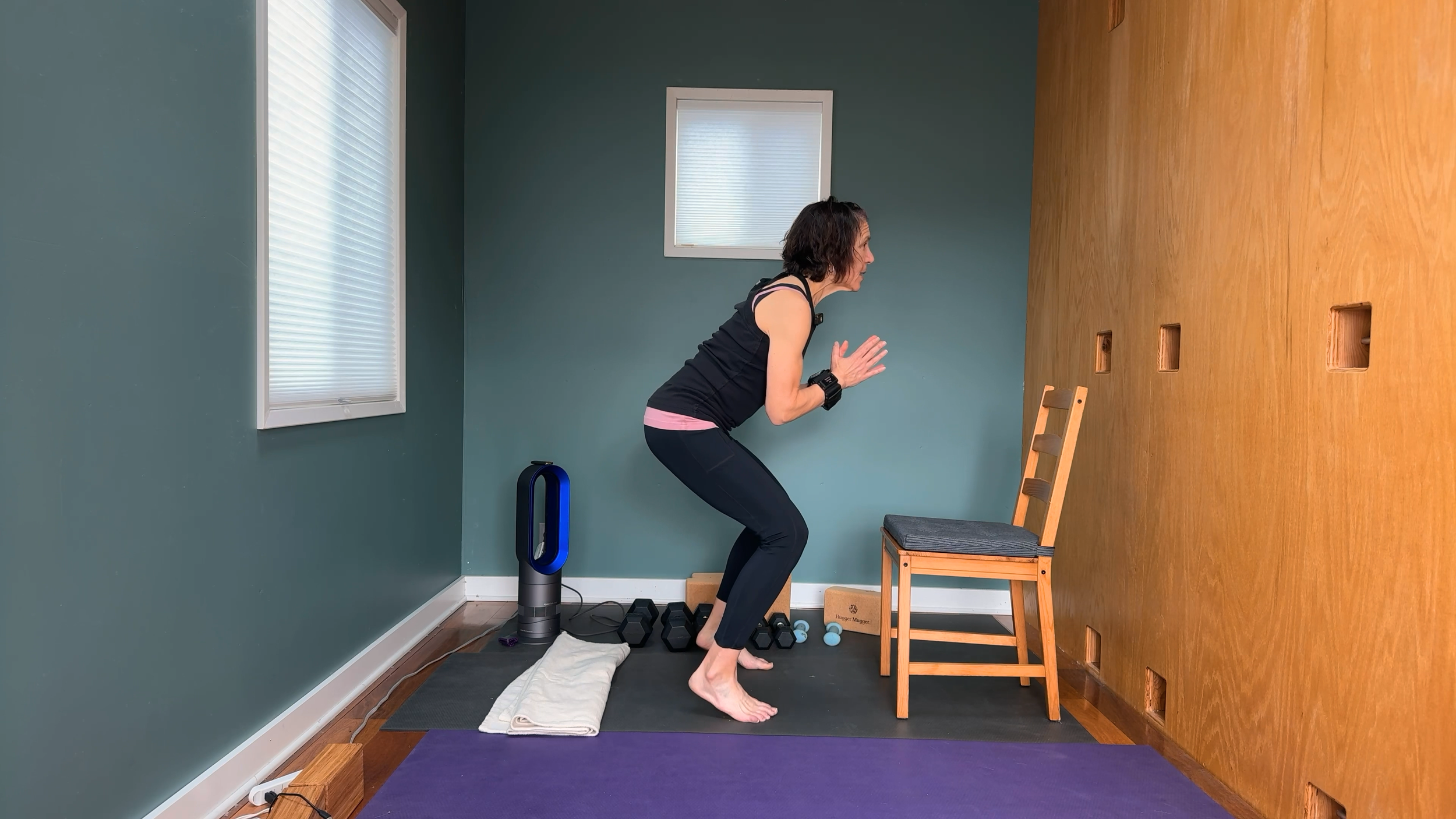
Once you can do that without any issues, take your hands away. Bring them to your chest — look, ma, no hands — and do the same thing. Now you're using more strength because your legs are doing all the work.
Here's what I love about the sit to stand — there are a lot of ways to adapt it:
Feel it in your knees? Take your feet wider.
Feel it in your back? Put a pillow or folded blanket on the chair so you're sitting higher. Less space to travel, less strain on the back.
Simple adjustments make a BIG difference.
What to Do When Your Heels Come Up During a Squat
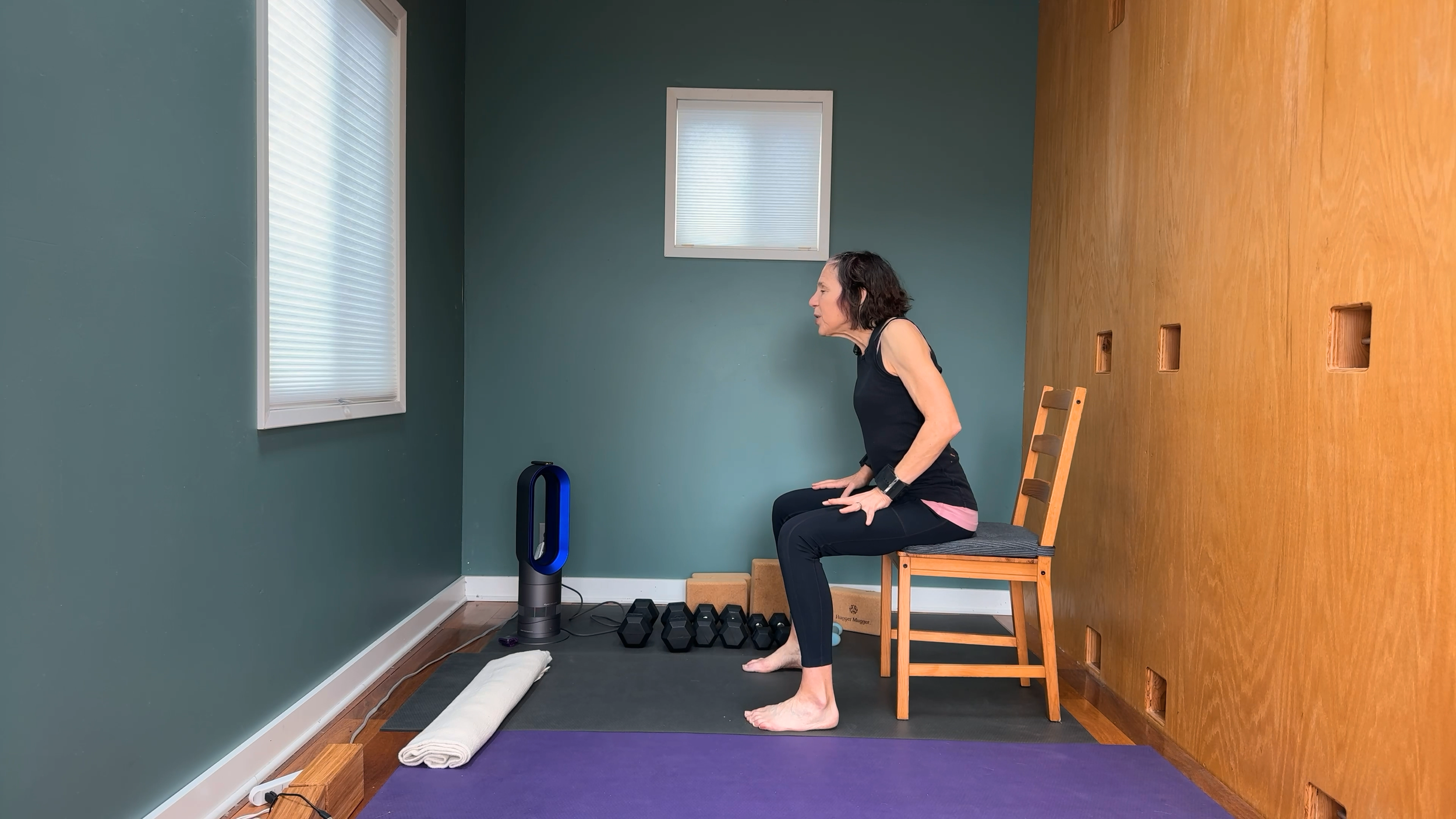
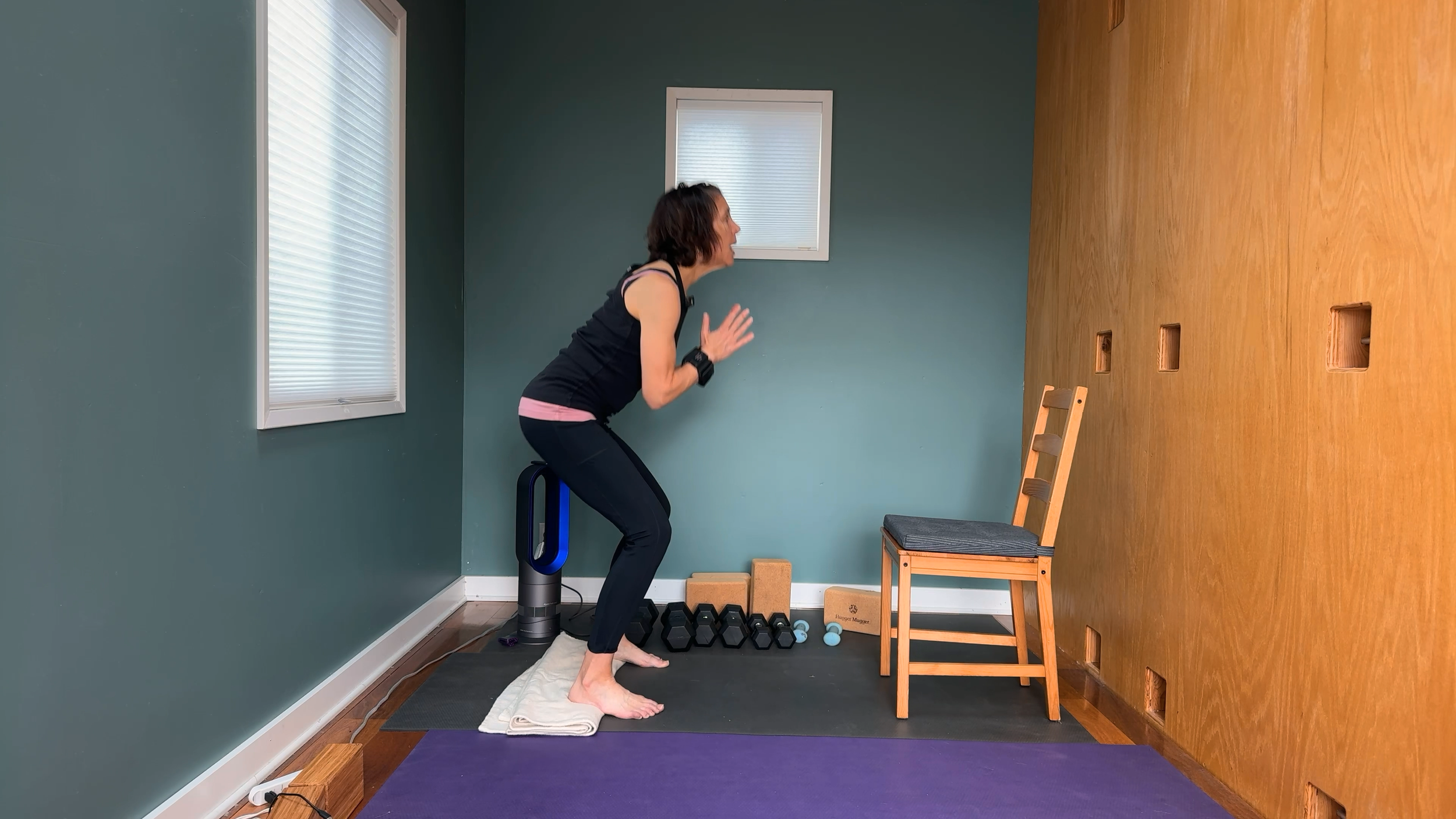
This is a big one. A lot of us over 50 have tighter ankles and feet. You try to squat, and even if it feels okay on your hips and knees, your heels pop up — and then you're worrying about balance, about falling. You're telling yourself, "my ankles are too tight, I'll never do this."
The fix is simple: raise your heels.
Put a folded towel or blanket under your heels. A book works. If you're in a gym, use a small weight plate. Now your heels are elevated, and you can drop into a much better squat without fighting your ankles.
Squats Hurt Your Knees? Go Wider
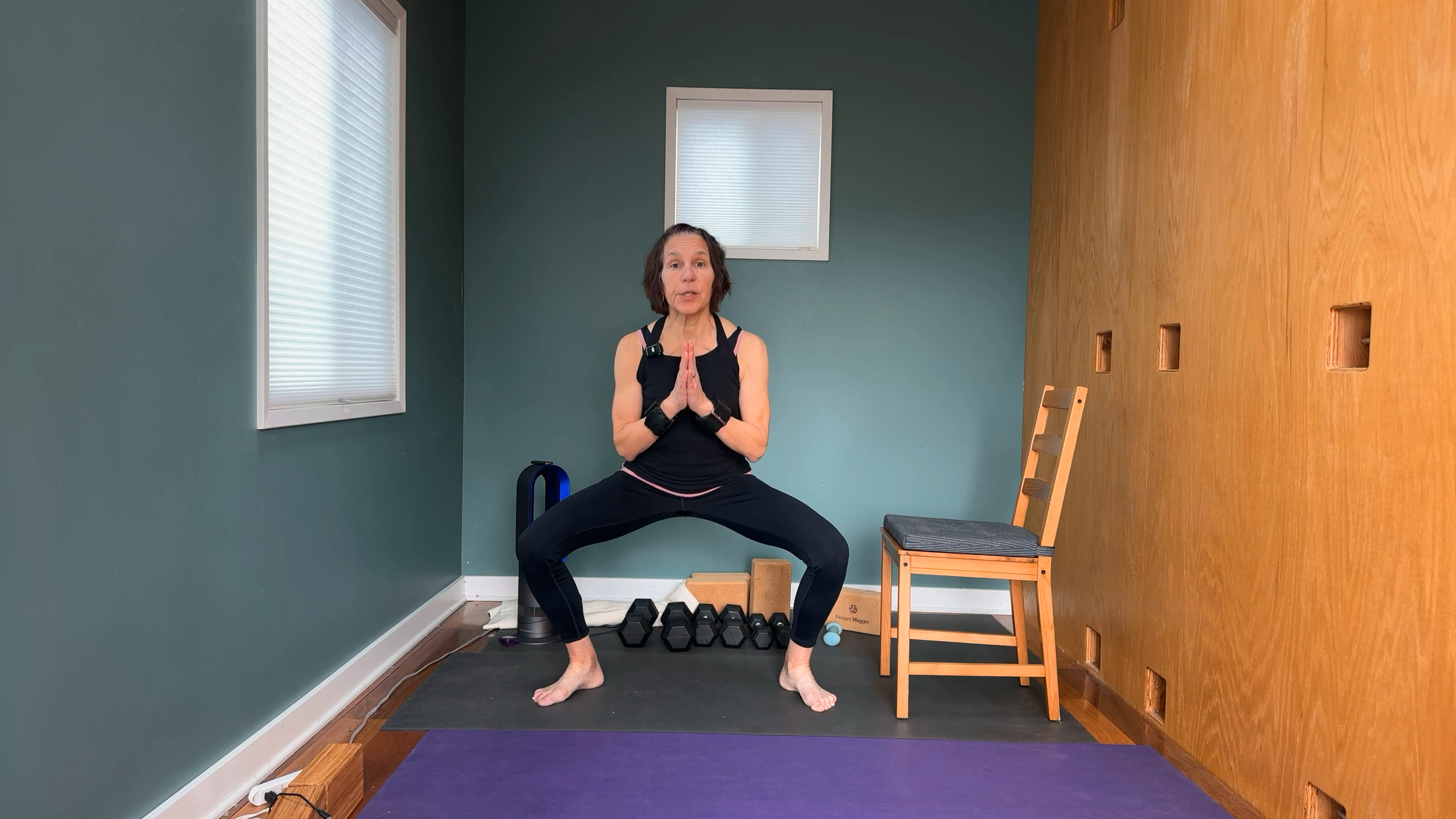
Here's where a lot of women get stuck. The squat feels fine on the hips, fine on the back — but ow, ow, the knees.
If that's you, you don't work through that kind of pain. It doesn't work like that. It's about finding the variation of squat that works for you.
So try this: get your legs wider. When your legs are wider, it's a different experience. You're not pivoting from your hips as much. For a lot of women, a wider squat feels a heck of a lot better.
Stop Doing Someone Else's Squat
Here's the real message: the goal is not to do a squat like me, or like your next door neighbor, or like you did 10 years ago.
The goal is to build strength.
All of these squat variations work.
The key is finding the one that works for YOUR body.
Start with the sit to stand, hands on thighs.
When that's easy, take your hands away.
If your heels come up, put a towel under them.
If your knees hurt, go wider.
I bet one of these will work for you — and that's all we need.
How To Strength Train At Home
If you want me to walk you through a full class — with the cues, the modifications, and the explanations so you understand WHY each exercise works — try my free 30-minute strength training class. I'll make sure the exercises work for your body, not against it.
Exercise works when you know how to work it.