Core Exercises for Osteoporosis (No Crunches Required)
If you've been diagnosed with osteoporosis or osteopenia, someone has probably told you to strengthen your core.
But if you've ever Googled "core exercises," the first thing that comes up is crunches.
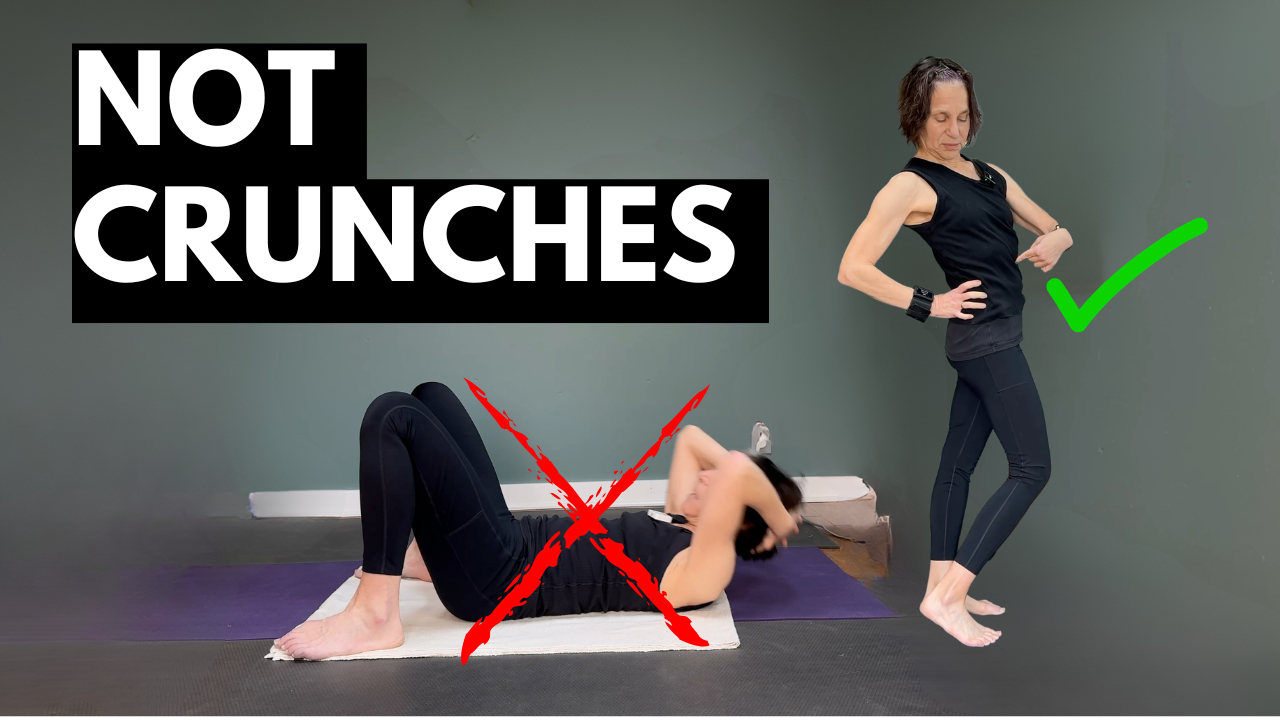
Here's the CHALLENGE of trying to do crunches when you have been diagnosed with osteoporosis or osteopenia- : crunches involve spinal flexion — you're rounding your spine under load, repeatedly.
If you have low bone density, that's exactly what you don't want to be doing. It's not that crunches are evil for everyone. It's that if you don't have the baseline strength yet, and your bones are already compromised, you're asking for trouble.
So what do you do instead?
Why Crunches Don't Work for Osteoporosis
With osteoporosis or osteopenia, the spine is already under stress. Repeated forward flexion — which is exactly what a crunch is — puts compressive load on the vertebrae. Over time, that can lead to fractures, especially in the spine. The goal is to build core strength while keeping your spine in a long, neutral position.
That's not a workaround. That's actually smarter training.
As always, please check with your doctor or physical therapist before starting anything new. Adjust so it works for your body.
Exercise 1: All-Fours Leg Lift
Start on all fours — hands under shoulders, knees under hips.
Extend one leg straight out behind you, keeping your hips level. Lift the leg. Hold for a moment. Lower it down. Then do the other side.
Here's something interesting: one side is always easier than the other. That's not a problem. That's not something wrong with you. That's just you being human. Noticing which side is harder is actually part of building real strength — you're paying attention to your body, and that matters.
Once you've got the basic movement, add this: place the opposite hand on your belly while you lift and lower the leg four times. The goal is to keep the belly still. If you can feel it moving, you've found your work.
Can't do four? Do two. No worries at all.
Modifications for real bodies: If getting on all fours is hard on your knees, fold a blanket underneath them. If your wrists bother you, make fists or use yoga blocks. This is weight-bearing exercise for your hands, shoulders, and hips — which is genuinely good for bone strength — so it's worth finding a position that lets you actually do it.
Exercise 2: Plank Prep (And the Real Plank When You're Ready)
The word "plank" can be intimidating- which is why it is important to learn HOW to do a plank step by step.
The video above explains how to do a beginner plank, so you can find a variation that works for you.
Here's what I want you to notice: when you break things down like this, you can actually do them. And they're not as scary as they looked from the outside.
Everything Is Progressive
This is the thing I want you to hold onto: if you can't do the leg lift with your hand on your belly yet, just do it without the hand. If you can't hold the full plank, stay in the prep. Over time, you will get stronger. That's not a pep talk — that's just how the body works when you give it consistent, smart training.
These are the exercises I start my own students on when they've been diagnosed with osteoporosis or osteopenia. These are a real starting point for building core strength in a way that's actually safe for your bones.
In our strength and mobility classes (designed for women over 50) offer a guided strength workout that you can do at home, with options for all levels. The best part about our workouts is that they come in a monthly plan- taking the guesswork out of what class or workout to do each week,
Free Strength Class
If this was helpful, please try my free 30-minute strength class.
It's designed specifically for women over 50 and offers bone-safe strength training — real bodies, real modifications, real teaching. No guessing, no confusion, no feeling like the workout wasn't made for you.