Osteoporosis Exercises That Build Bone Density
Let’s talk about the best exercise program if you are diagnosed osteoporosis.
One day you are taking exercise classes and going for walks. Maybe you are going to the gym, riding your bike or practicing yoga everyday. After your osteoporosis (or osteopenia) diagnosis- all of a sudden you have to be careful. The next, everyone is telling you to be careful, avoid this, skip that. And the osteoporosis exercises advice you find online is so cautious it basically tells you to do nothing.
Neither one helps your bones.
Here is what really works. have a REAL conversation with your doctor. Talk about strength training and how to get started. Because smart strength training is something you can control when there are so many things (like genetics) that you can’t/
Our bodies will respond to smart strength training by getting stronger. Bones are living tissue. Bones (and muscles) respond to a challenge. Stop challenging them and they have no reason to get stronger. That is why the right kind of strength training can help so much.
What Exercises Do I Recommend For Osteoporosis
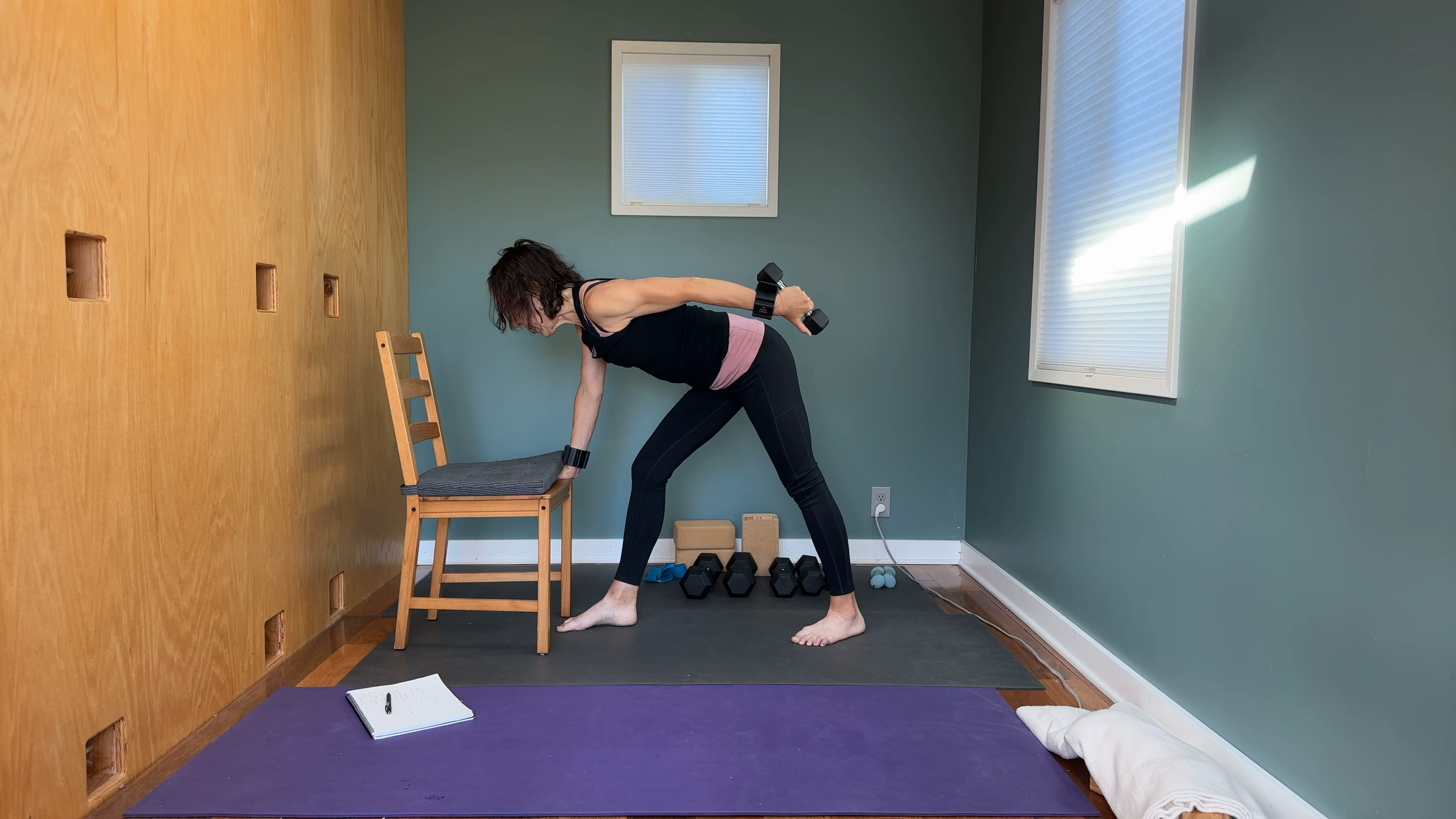
Your exercise plan should do three things well. It should load your bones, strengthen the muscles that support your spine and hips, and improve balance.
That sounds simple, and it can be, but many programs are either too fear based or unrelaistic. What most programs get wrong is that they are either too gentle (not useful) or not designed with both safety and effectiveness in mind.
Walking is great for general health, but by itself it is usually not enough to maintain or improve bone density. Stretching feels good, but it does not give bone the signal it needs. Stretching feels good, but it does not give bone enough of a load to get stronger as explained here Why Yoga Doesn't Build Strength After 50.
The goal is NOT to move less. The goal is to move with intention. Strong hips, strong legs, good posture, and the ability to hinge, squat, step, and carry well all matter because these exercises build strength, mobility and balance.
What is The Best Kind Of Exercise For Women With Osteoporosis
The strongest programs usually combine a few types of work rather than relying on one.
Progressive strength training
This is the backbone of the whole thing. If you have osteoporosis or osteopenia, you need your muscles pulling on bone in a meaningful way. That is what helps create the stimulus bones respond to.
The most useful exercises tend to be straightforward. Squats to a box or bench, deadlift patterns, step-ups, rows, presses, and loaded carries all train the body to handle force better. They also build the kind of practical strength that shows up in daily life - getting up from the floor, carrying groceries, climbing stairs, and catching yourself if you trip.
Progressive matters here. Using the same light weights forever may feel productive, but bone responds to challenge. That does not mean going reckless. It means starting where you are, using solid form, and gradually increasing load over time.
Weight-bearing impact, when appropriate
This is the part that gets oversimplified. Some impact can be helpful for bone because it creates a clear loading signal. That might mean brisk marching, stomps, low-level hops, or small jumps for the right person.
But it depends. If you have significant bone loss, joint replacements, pain, or poor balance, impact has to be chosen carefully. More is not automatically better. We need to progress slowly and the BEST way to do that is to work with a qualified trainer or physical therapist. Exercise programs need to be adjusted for the individual and I have found that impact, or stomping, can be great when the right amount with the right intensity is used.
Posture and Hip Strength
You need strong upper back muscles, better awareness of spinal alignment, and enough mobility in the hips and thoracic spine so you are not asking the low back to do everything. Check out this great routine for improving hip mobility- Hip Mobility Routine for Women Over 50 and remember that a little exercise done consistently can make a huge difference,
Exercises that strengthen the back extensors and teach you to maintain a long spine during daily movement can make a huge difference. We tend to round forward in our chairs and our couches and even while driving- good effective strength training will help reduce the slump and build stronger posture.
Balance and gait work
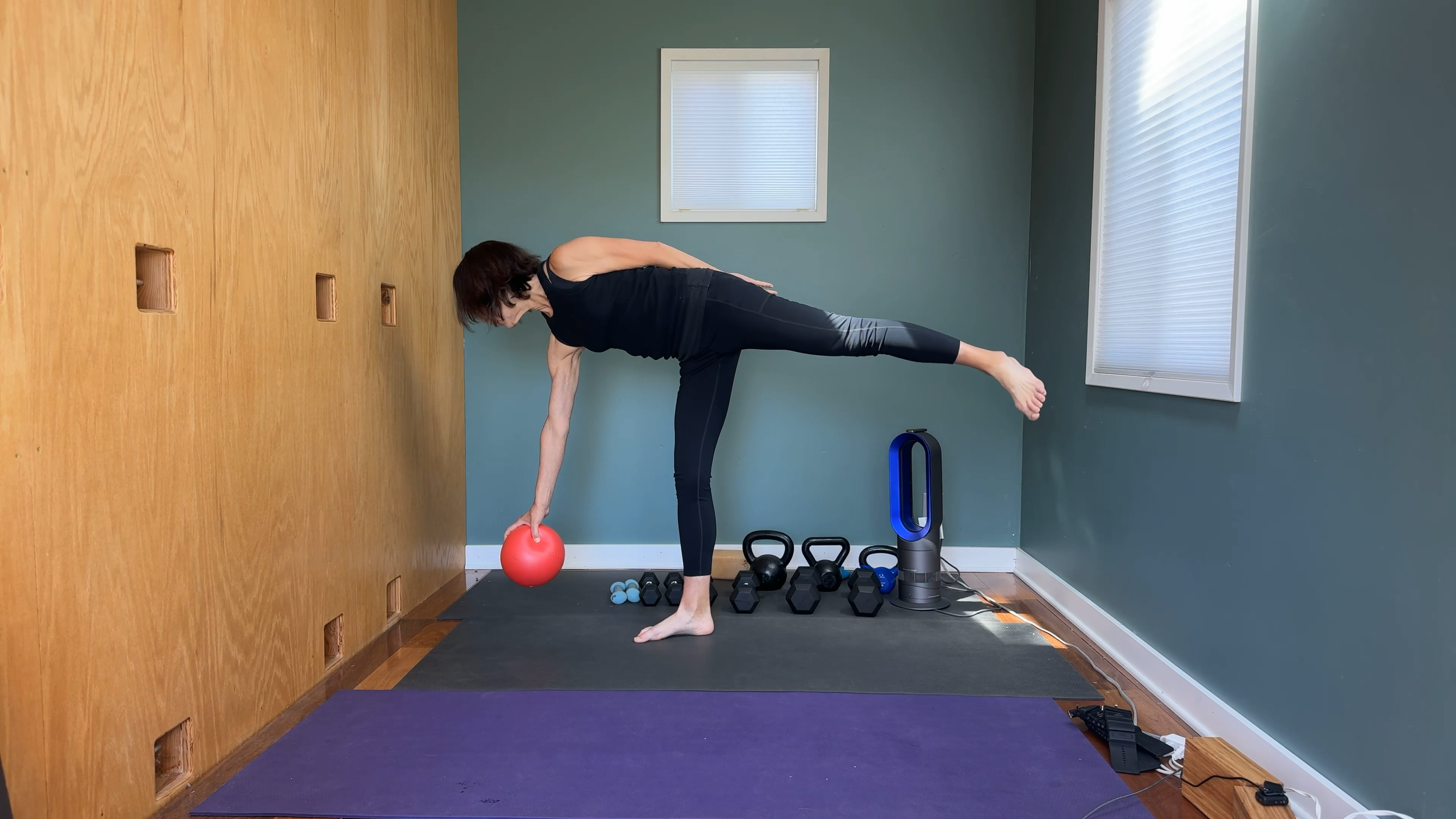
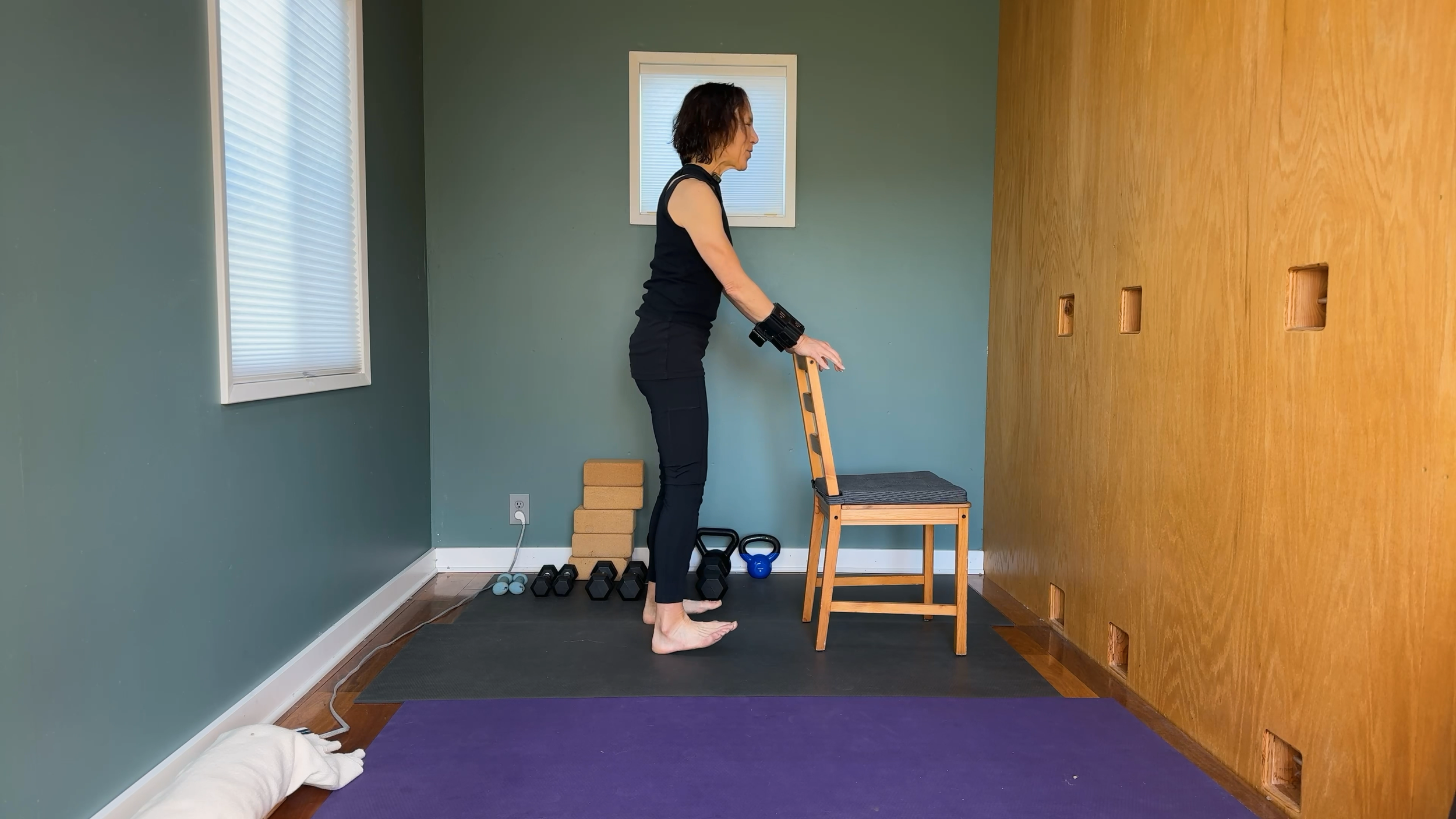
Simple balance work makes such a difference. I always say in my classes, the way to get better at balance is work on balance. Working on balance in the safely of your home- when you are holding on to a chair or wall is a great way to get started.
Single-leg standing, controlled weight shifts, step patterns, and walking drills can improve your balance and reduce your risk of falling. I have a ton of great exercises in this article.
Exercises that are often a good fit
There is no one perfect list, but there are patterns that show up again and again because they work.
Sit-to-stands and squats build leg and hip strength. Hip hinges teach you how to lift without folding your spine into flexion. Step-ups strengthen the legs and challenge balance at the same time. Rows and band pulls help support posture and upper back strength. Farmer carries train the trunk, hips, and grip while reinforcing upright alignment. Wall push-ups or incline push-ups can build upper body strength without putting you on the floor if getting down there is a production.
Then there is the less glamorous work, which I personally love because it fixes so many things. Standing hip work, calf raises, lateral stepping, and targeted core exercises all help create a body that can transfer force better. That matters for bone, and it matters for pain.
If your lower back gets cranky, the answer is not always a weaker core. Sometimes it is poor hip mobility, poor hinging mechanics, or a rib cage that flares every time you lift your arms. These details matter. They are also the reason smart coaching changes everything.
What to avoid or modify
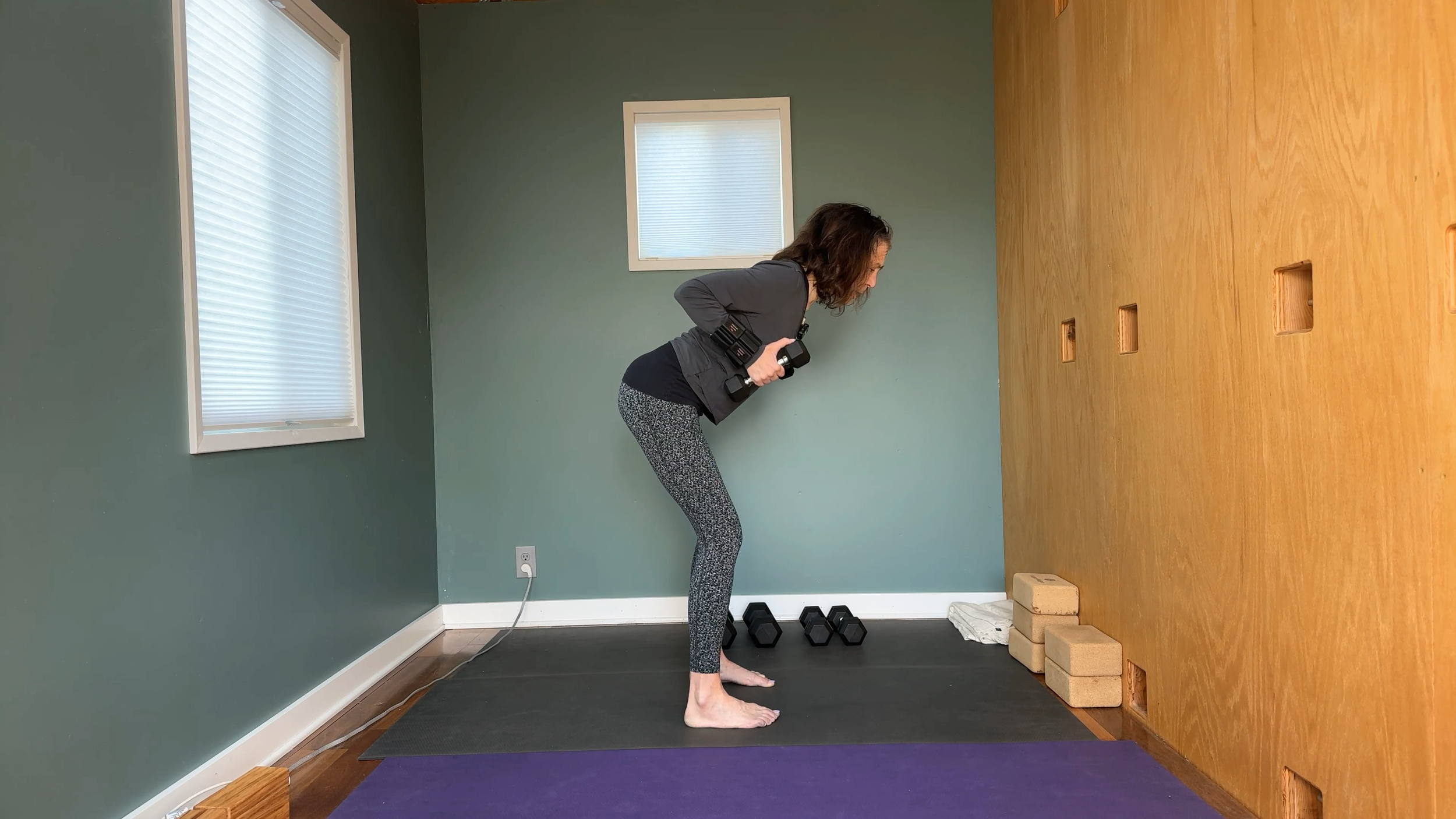
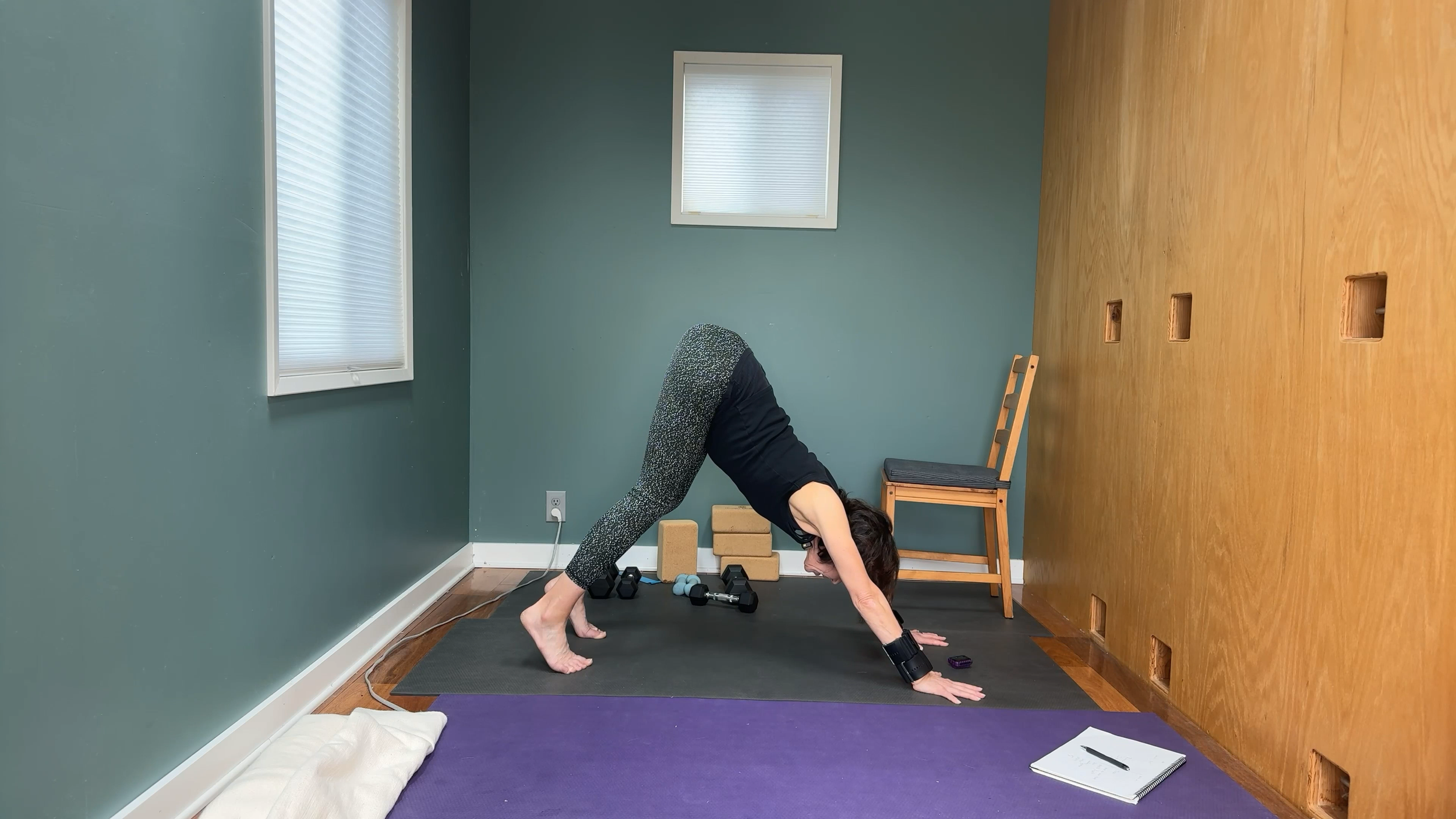
Most women with osteoporosis should be cautious with repeated spinal flexion, especially loaded flexion. In plain English, that means deep rounding forward under load is usually not a great idea. Aggressive twisting can also be a problem, particularly if it is fast or combined with force.
That does not mean your spine is fragile. It means exercise selection matters. Toe-touching with momentum, crunch-heavy workouts, and rotations done without control are common examples of movements that may need to be reduced or replaced.
The better question is what is the goal? If the goal is core strength, there are better options than repeated spinal curling. If the goal is less back and hip pain and more power, then a well rounded exercise program will work a zillion times better instead of doing a hundred sit-ups- which is one of the exercises we want to avoid.
Why form matters more than exercise names
Two people can do the same exercise and get completely different results. One woman does a deadlift with a strong hip hinge, good pressure through her feet, and a long spine. Another rounds through her back, never loads her hips, and it feels awful. Same exercise . Totally different outcome.
That is why a good osteoporosis program is not a list of exercises. It is learning HOW to do the exercises so the exercise work for YOUR body. Our focus is in how to adapt and adjust the exercises so we can increase the challenge or adapt the challenge is the exercise can be BOTH safe and effective.
The mistake I see most often
Women either do too LITTLE because they are scared, or they do too much of the wrong exercises because of a lack of information and guidance.
Your program needs to match your actual body, and work with what you got so - to what you got works for YOU!
That is why structured strength and mobility work is so effective. It gives you a way to train that is specific enough to build strength yet there is guidance and suggestions to make sure you can adapt as needed.
Ready to get stronger? Start with my free 5-day strength program — designed specifically for women over 50.
Already know you're ready? Join The Elevate Practice — guided strength and mobility workouts for women over 50. $59/month, cancel anytime.
FURTHER READING