Hip Clicking? Start Strengthening
Your hip clicks. Maybe it pops. Maybe it sounds like Rice Krispies every time you get up from a chair or try to do a yoga pose. So you stretch it. More hip openers. More time on the floor. And it still clicks.
Here's the thing: stretching is not the solution. Strengthening is.
I'm Wini Linguvic, strength and mobility coach with 43 years of experience. When a hip clicks or snaps, the real issue is almost always the same: the muscles around the joint aren't doing their job. They're weak. And when those muscles aren't supporting the hip the way they're supposed to, you get the snapping, the popping, the sounds that make you nervous every time you move.
Build the strength, the clicking goes away—or gets a lot quieter. Let me show you exactly how.
Why Stretching That Clicking Hip Is Working Against You
Most people feel the click and immediately think: I am tight.
So they stretch.
More yoga, more foam rolling, more time in pigeon pose.
And nothing changes.
Here's the problem. If the muscles around the hip joint are weak, stretching does nothing for that weakness. You're working on the wrong thing. Stretching might feel temporarily better—but twenty minutes later the clicking is back, because the joint still isn't supported.
What the hip needs is muscle. Specifically, the glutes and the hip abductors—the muscles that wrap around the joint and hold everything where it belongs. When those muscles are strong and doing their job, there's less tendency for the snapping, clicking, and the noise that sounds like something's wrong. Because nothing is wrong—the joint is just unsupported.
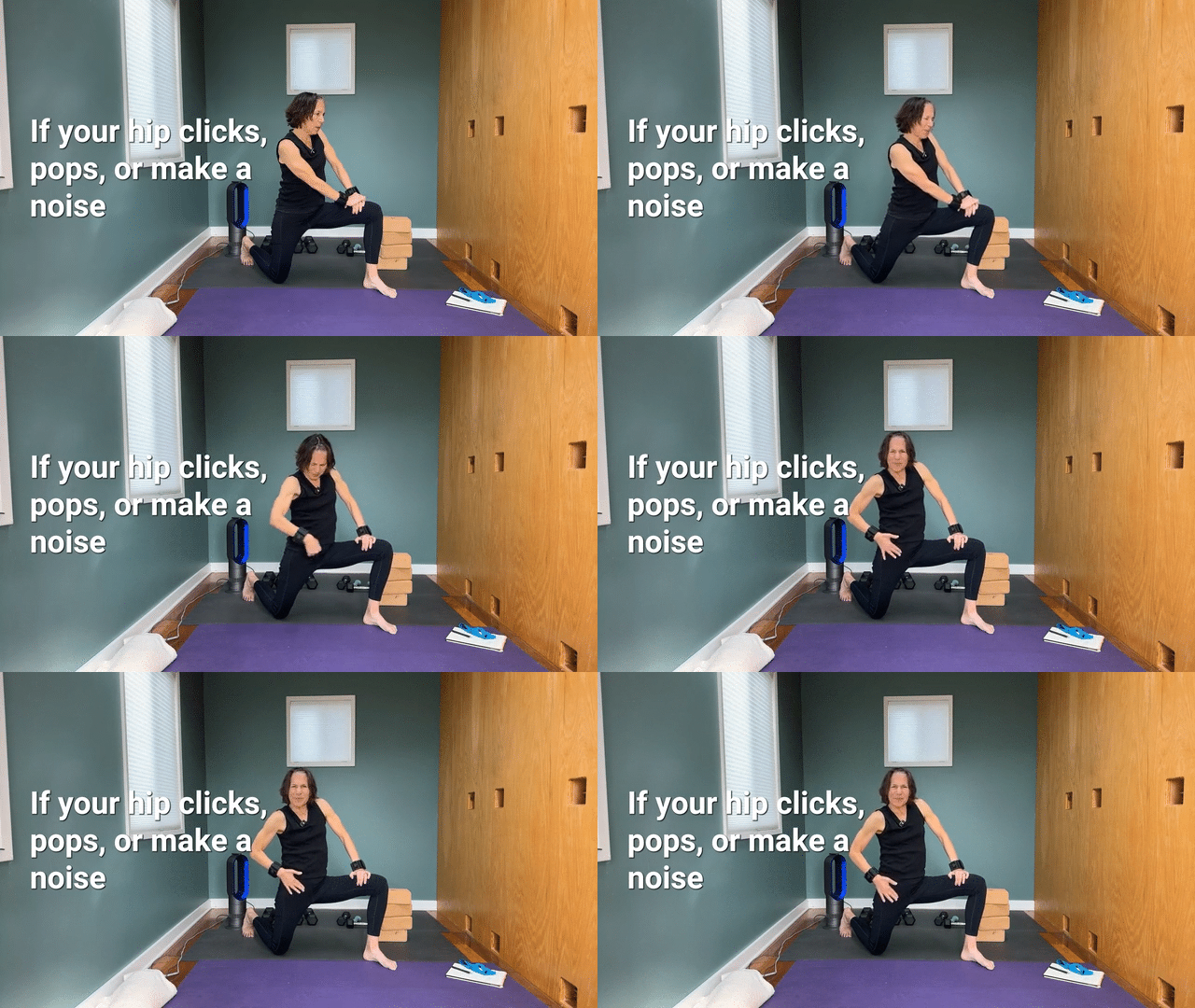
4 Exercises That Stop Hip Clicking by Building Hip Strength
These four exercises work together. They target the glutes from different directions—front-to-back and side-to-side—and add controlled hip mobility on top of that. Start without weights. When you can do all the reps with good form, add ankle weights. That's how you progress this and actually change what your hip can do.
Exercise 1: Glute Strengthener on All Fours (Hip Extension)
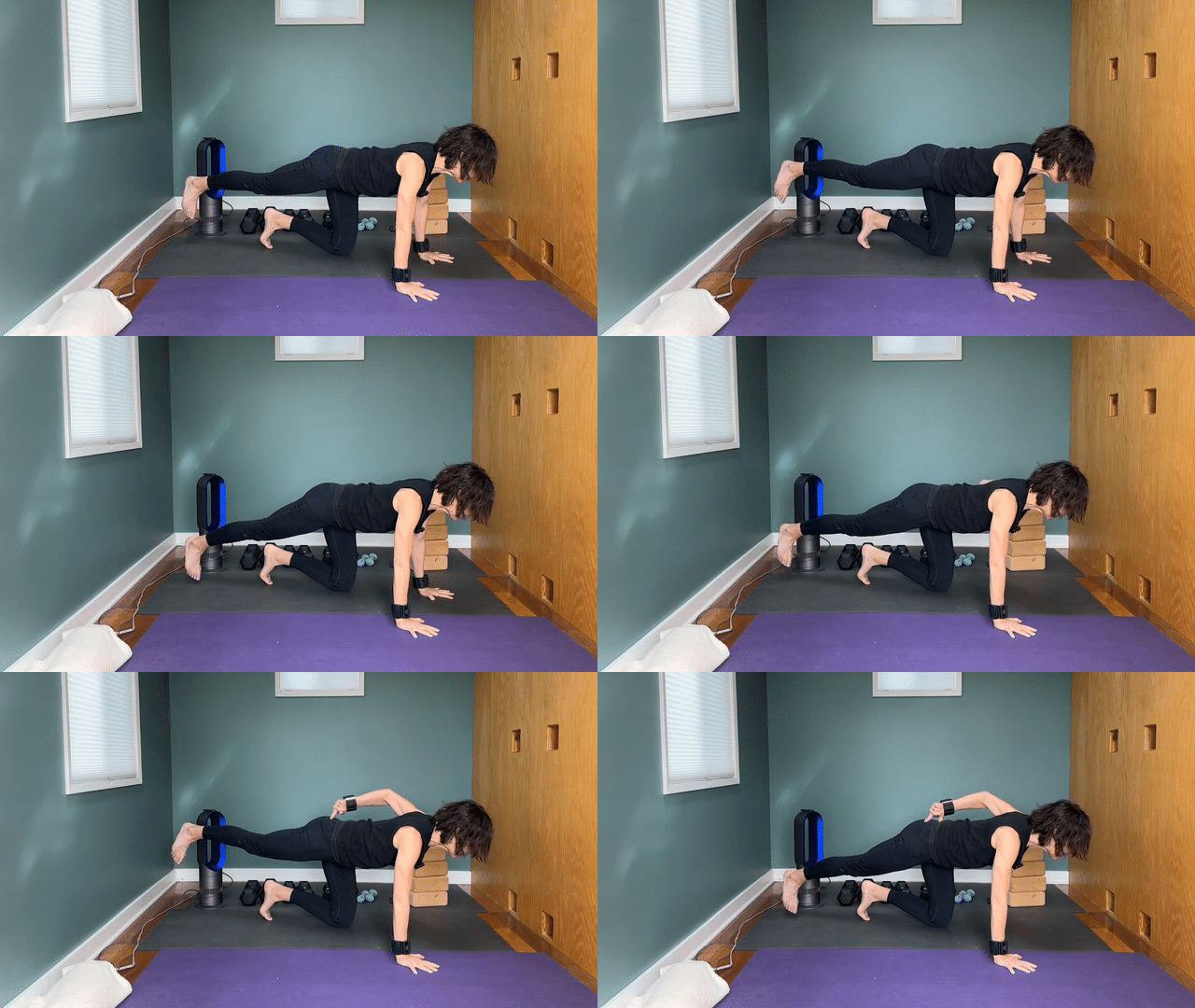
Come onto all fours—hands under shoulders, knees under hips. Extend one leg straight out behind you and lift it. The key here is keeping the hip level and square. Don't let that hip hike up to get the leg higher. The goal is controlled movement with the pelvis staying still.
This is hip extension, and it's working the glutes in exactly the direction you need—the same movement your hip does every time you walk or stand up from a chair. When your glutes are strong in extension, the joint has the support it needs.
Goal: 15 reps on each side. Start with 8 if 15 is too much right now. When 15 is easy, add a light ankle weight to progress.
Exercise 2: Hip Abduction in Asymmetrical Table
Now we move into what I call an asymmetrical table. Lean on one forearm and one hand, keeping your back long. From here, take the top leg out to the side. You're aiming for the knee to line up roughly with the hip, but if you can't get it that high yet, that's fine—you go where you can with control.
This is hip abduction, and it targets the muscles on the outside of the hip—the ones that most fitness classes completely ignore. Those outer hip muscles are huge players in keeping the joint stable, especially when you're walking, going up stairs, or balancing on one leg.
Goal: Start with 8 on each side, work up to 15. Add an ankle weight when 15 feels manageable.
Exercise 3: Hip Circles Forward
Stay in that asymmetrical table position. This time instead of taking the leg straight out, you're going to circle it forward—nice and controlled. The rest of your body stays still. You're only moving the thigh bone in the hip socket.
Important: if you hear a snap or a click during the circle, make the circle smaller. Here's why that works: the click is happening because your leg is traveling into a range the muscles aren't strong enough to control yet. When that happens, the tendon snaps over the bone instead of gliding smoothly past it. A smaller circle keeps you in the range where your muscles can actually do their job. As those muscles get stronger, they'll be able to control a bigger range—and that's when the circle gets bigger and the clicking stops. That's how you know it's working.
Goal: Start with 5 on each side, work your way up to 15. Add an ankle weight when you're ready to progress.
Exercise 4: Hip Circles Back
Same position, opposite direction. You might find one direction is easy and the other is significantly harder—totally normal. The hip muscles don't all work the same way in both directions, and this is exactly where the weak spots show up.
Keep the same rule: if it clicks during the circle, make it smaller. Keep everything else still. The goal is to move only what needs to move.
Goal: Start with 5 on each side, work up to 15. Add an ankle weight once you're there.
What Happens to Hip Clicking When You Build This Strength
The clicking usually doesn't disappear in a week. Give it several weeks of consistent work before you judge whether it's helping. You're building muscle, and that takes time.
What you might notice sooner: your hip feels more stable. Getting up from a chair is easier. The clicking happens less often, or when it does happen, it's quieter. Those are all signs the muscles are starting to support the joint the way they're supposed to. Keep going.
One note: if your hip is actually painful—not just clicking, but hurting—check with your doctor before starting.
These exercises are for the common clicking and snapping that happens when the hip muscles are weak and underworked, not for acute pain or injury.
Want to try a simple strength class?
If you want to try a free 30-minute class where I walk you through strength and mobility training step by step—with options for real bodies and explanations of why each exercise works—come join me here
FURTHER READING