Squats With Osteoporosis: Where To Start
Can you do squats with osteoporosis?
Yes.
You want to challenge yourself, you want to build strength, and the squat is one of the best ways to do both.
Here is the part that matters more than any single rule you were handed at your diagnosis.
You need to find the squat that works for your body.
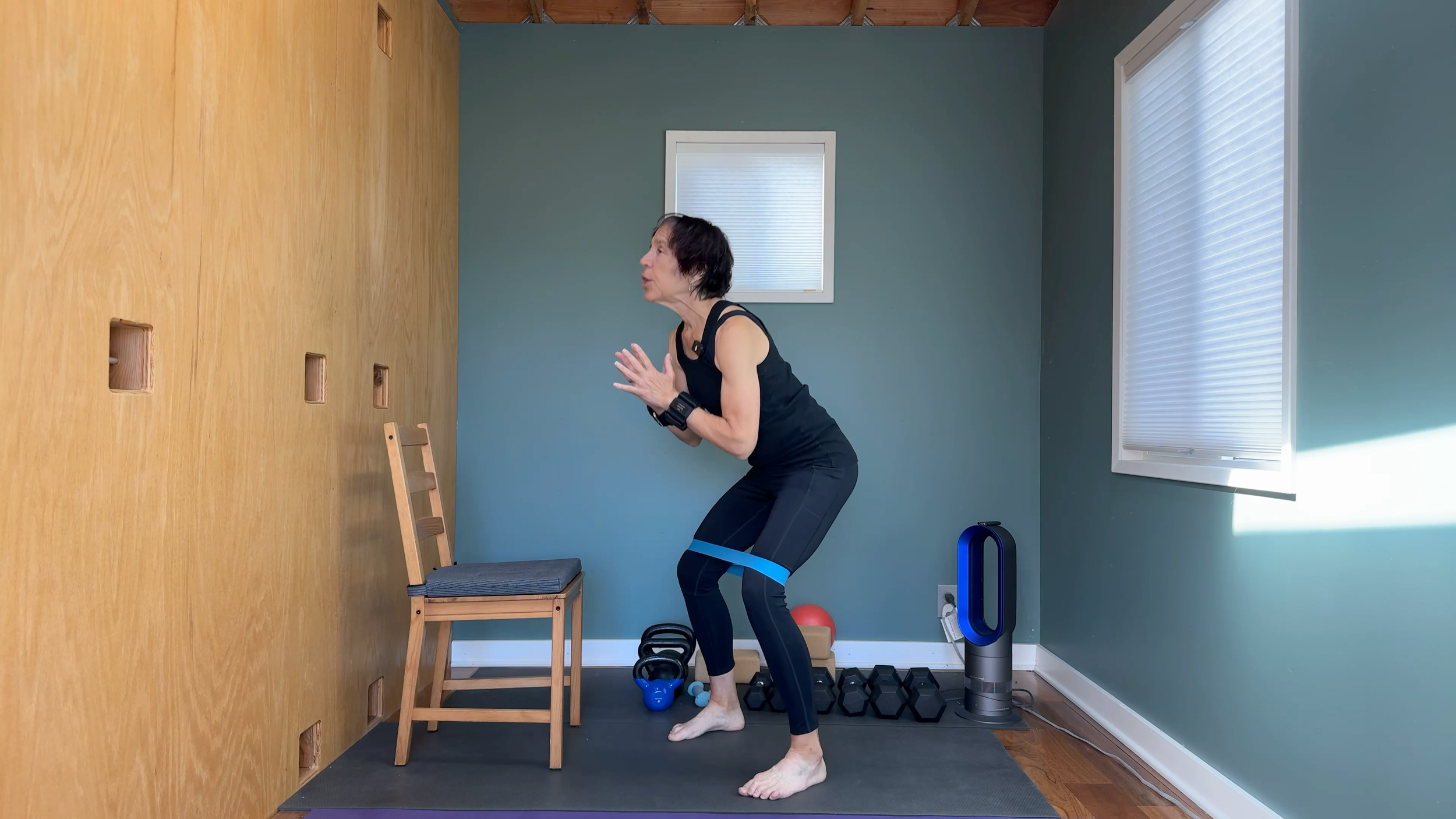
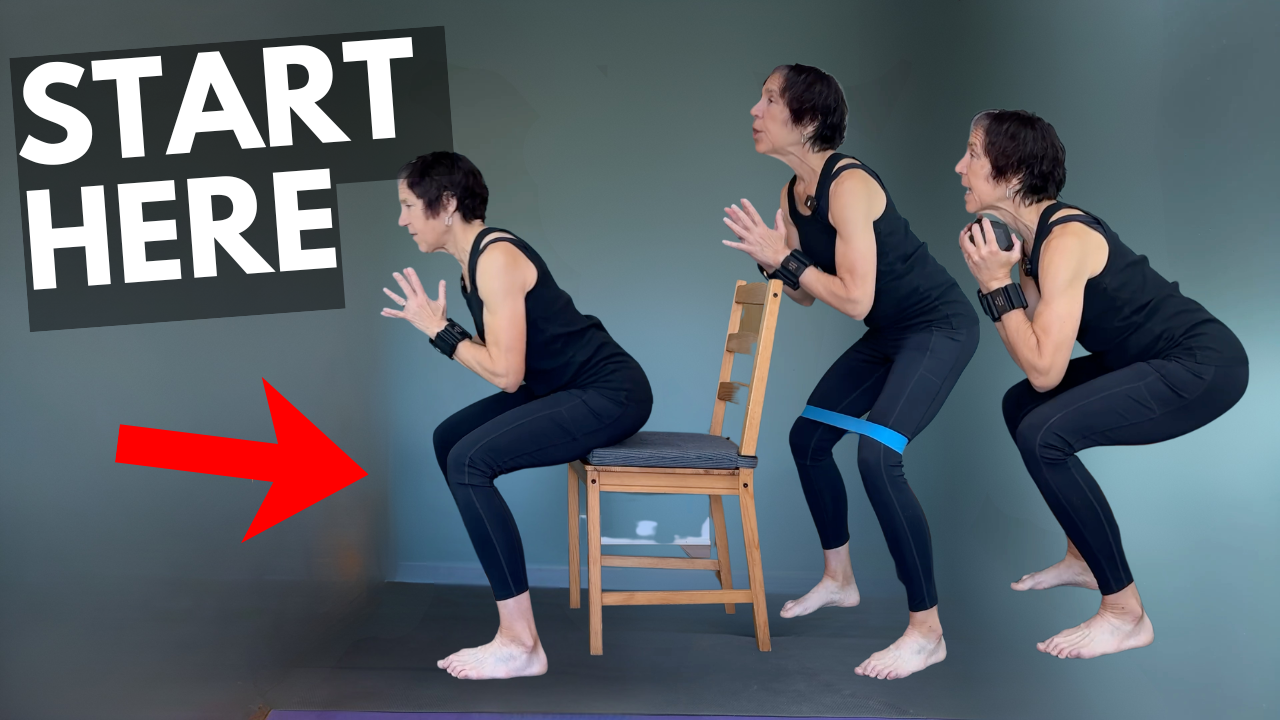
If you have osteoporosis, osteopenia, or low bone density and you are not sure where to start, this is the progression, from a chair to a loaded squat.
Frequently asked questions
Can you do squats if you have osteoporosis? Yes. Squats build strength and load the hips and spine, which is where bone density matters most. The key is finding the squat variation that fits your body today, starting with a sit-to-stand in a chair and progressing to a loaded squat over time.
How should a beginner with osteoporosis start squatting? Start with the sit-to-stand: sit tall in a chair, push gently through your thighs to stand, and lower back down with control. Once your back stays long and you no longer need your hands, move away from the chair, then add a weight held at your chest.
How do you know if you are squatting too deep with osteoporosis? You are going too low if you fall forward at the bottom, or feel it in your back, knees, or hips. Come up to a height where you can keep your back long and stay in control, and build depth gradually.
Should you use weights when squatting with osteoporosis? Yes, once your form is solid without a chair. Hold a weight at your chest and come down. If you cannot stand back up, it is too heavy. If it simply feels more challenging, that is the right load. Always keep good form over heavier weight.
Do resistance bands help with knee pain during squats? Often, yes. A band placed above the knees activates the muscles that support the knee joint, which gives many people more stability and less ache. Try it it for a few sessions, then reassess.