Core Exercises for Osteoporosis With The Pilates Ball
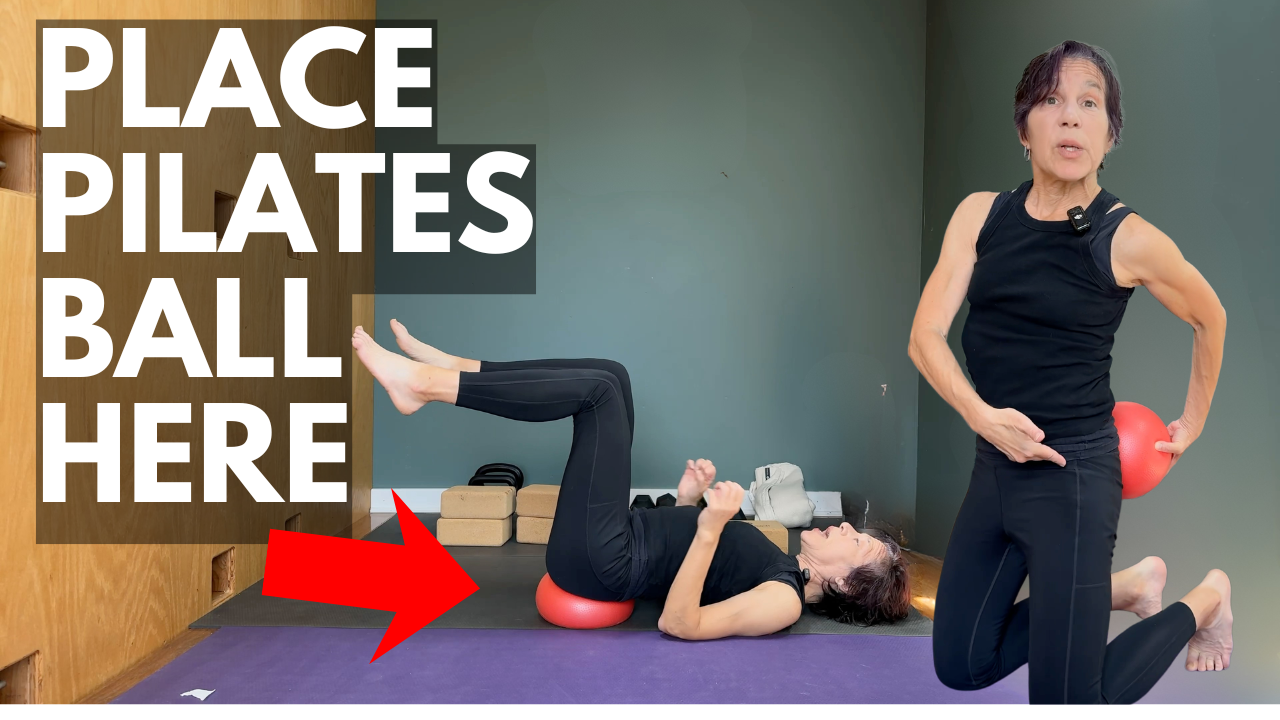
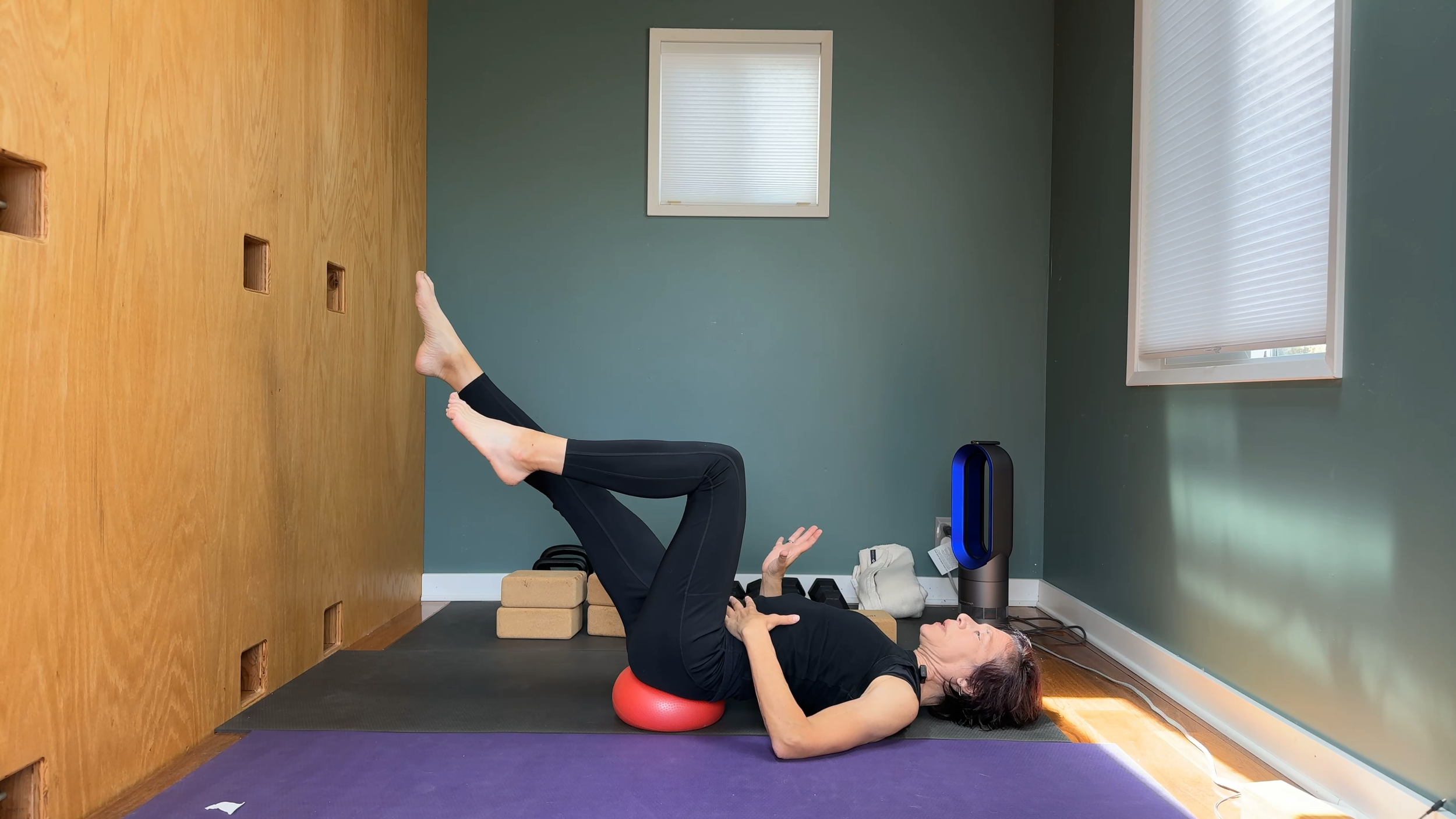
The way to effectively and safely work your core when you have osteoporosis is to work on exercises that build stablility- like dead bugs and planks. And the way to optimize both of these exercises is to ad a Pilates ball
A ball adds a stability challenge for the dead bugs and helps activate (and FEEL) the core for planks. Please watch the video for step by step instructions on how to do these exercises.
Why core work matters when you have osteoporosis or osteopenia
These exercises build core stability. And there are so many different ways to make these harder or more accessible. The key is to focus on staying stable as your arms and legs move. Stability is what protects your spine when you pick up a package, take a hike, get out of a car, or reach for something on a high shelf.
When you give your body a challenge, your body adapts to that challenge by getting fitter and stronger. That's the whole mechanism. It applies to your muscles and it applies to your bones.
How often should you do these exercises
Three times a week is what I would suggest if you are just starting out.
Two rounds of the dead bug progression and moving planks.
Eight repetitions for the dead bugs and eight moving planks.
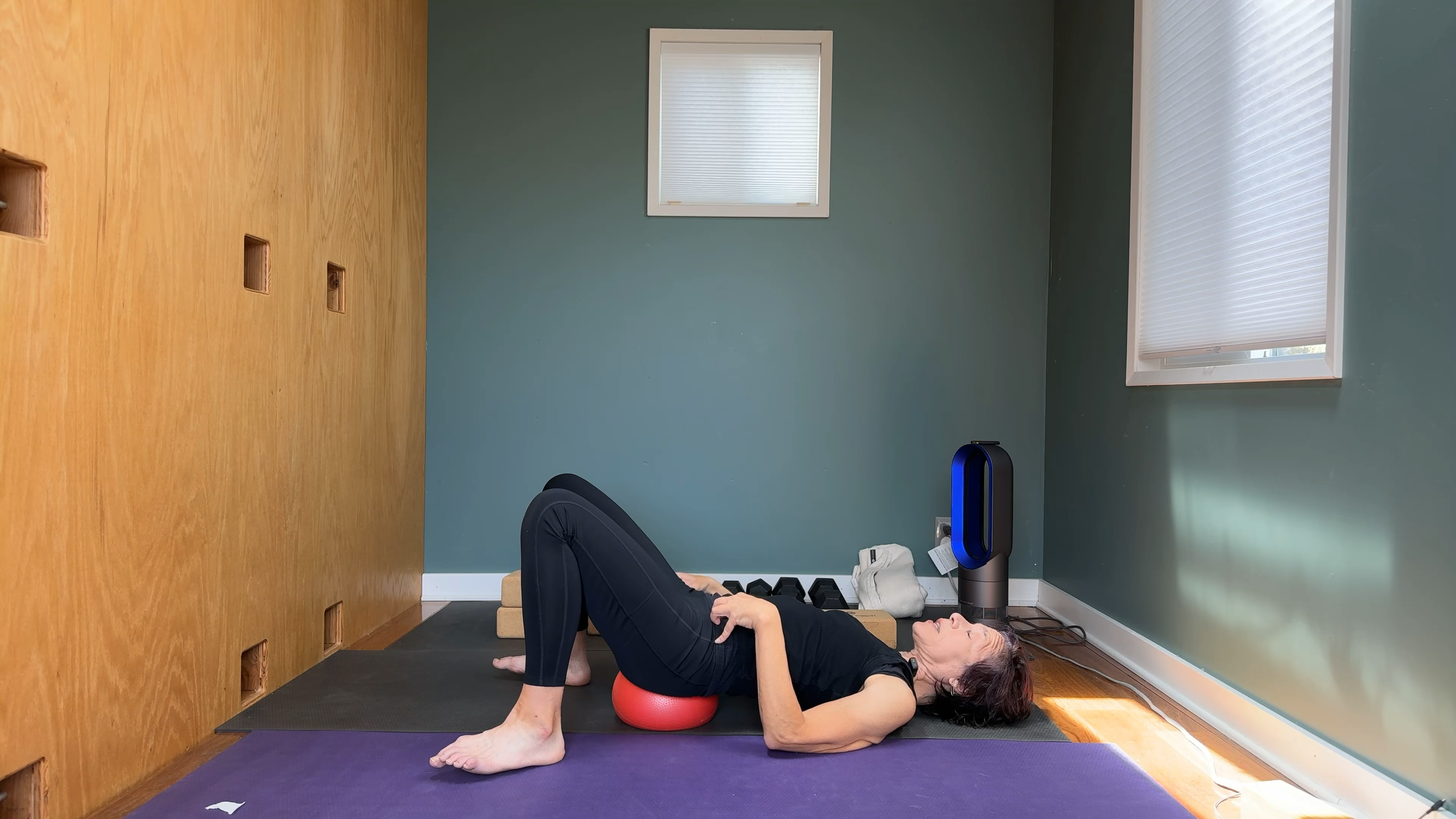
One self check: if you feel this in your low back, the ball has crept up toward your waist. Move it back down under your pelvis.
Common Questions About Core Exercises For Osteoporosis
Can I do core exercises if I have osteoporosis? Yes. What you want is core stability work, where your torso stays still while your arms and legs move. Dead bug variations and plank work fit that. What we DON”T want to do is excessive loaded flexion (like sit-ups) or extreme twisting.
Are crunches and sit-ups safe with osteoporosis? Crunches and sit-ups round the spine forward under load, which is the movement pattern that should usually be avoided. Dead bug and plank work give you the strength without that pattern. More about core strength exercises for osteoporosis here.
What size Pilates ball should I use? A small inflatable ball around nine inches works well for both the hip placement and the inner thigh squeeze. Reach out if you need a direct link to purchase one.
What if I can't hold tabletop? Take one leg up at a time and keep the other foot on the floor. Practice that until it feels solid, then try both.
Where can I find classes with these exercises? Ask me about our extraordinary online program or if you are in the Bay Area- check out our Pacifica program.